
Skin concerns · Fine lines and texture
Dehydration Lines vs. Wrinkles: How to Tell the Difference
What dryness can change, what moisturizer can improve, and why a fine line rarely tells the whole story.
TL;DR
- Dehydration lines is a common skincare term for fine lines made more noticeable by reduced moisture in the outer skin. Wrinkles also reflect factors such as aging, sun exposure, and facial movement.
- Dryness and wrinkles can exist together. A line softening after moisturizer does not prove that it was caused only by dehydration, and a selfie or cheek-pinch test cannot settle the question.
- Start with gentle cleansing, a comfortable moisturizer, and daytime sun protection. Hydration can improve the appearance of some fine lines, but it cannot erase every crease or reverse all age-related changes.
A few lines look sharper after washing, under makeup, or during a dry week. Then they seem softer the next morning. It is easy to wonder whether they are dehydration lines, wrinkles, or a sign that your routine needs changing.
The useful question is what your skin needs now. Comparing dehydration lines vs wrinkles can help you understand the possibilities, but you do not need to label every crease before improving an uncomfortable routine.
Dehydration lines vs. wrinkles at a glance
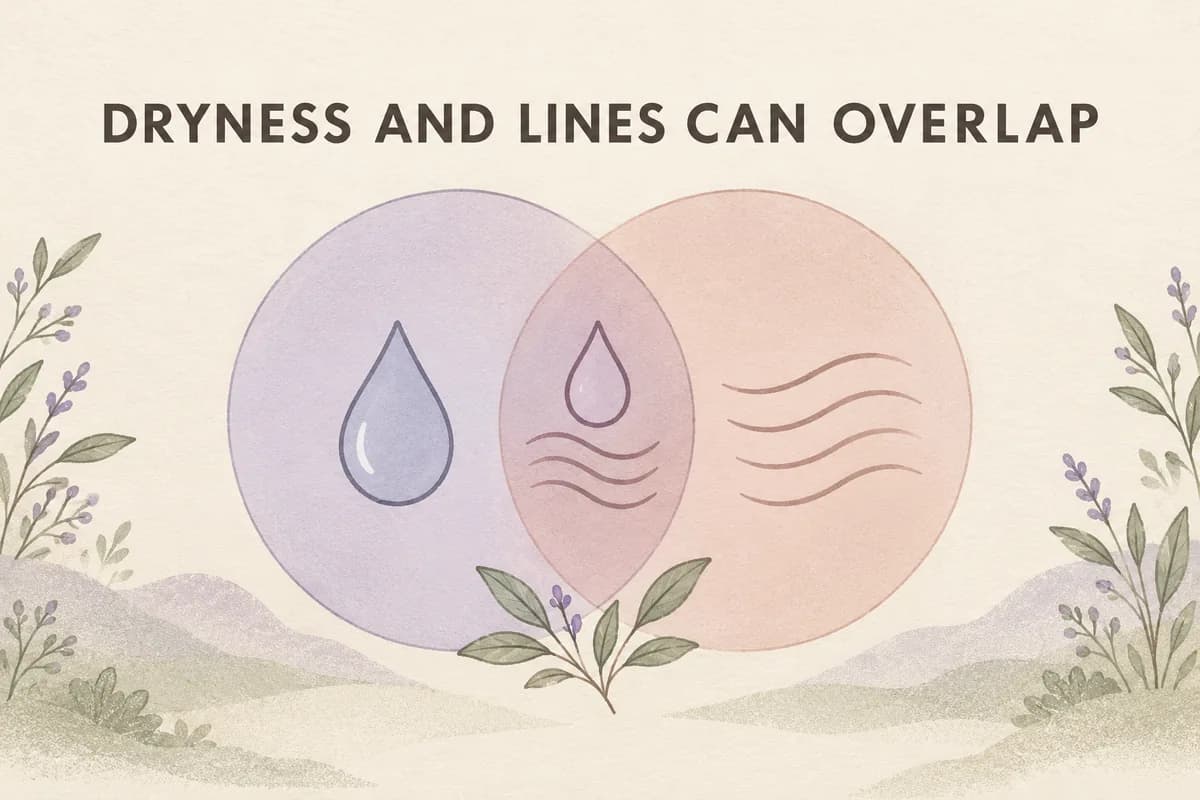
Dryness can make fine surface lines look more noticeable. Wrinkles are lines and creases influenced by changes in the skin over time, including its support, elasticity, and repeated movement. These descriptions overlap rather than dividing every face into two separate categories.
Use the comparison below to describe what you see and feel. It is not a diagnostic checklist. Neither the depth of a line nor its location tells you, on its own, whether moisture loss is the main issue.
| Observation | What may contribute | What it cannot prove |
|---|---|---|
| Fine lines with tightness or flaking | Dryness, irritation, and existing facial lines can overlap. | That every line is caused by dehydration. |
| A crease changes when you smile or raise your brows | Facial movement and normal expression patterns. | Whether dryness is also making it more visible. |
| Lines look softer after moisturizer | Improved surface moisture and a temporary appearance change. | That collagen changes or all wrinkles have been reversed. |
| A line stays visible when your face is relaxed | Age-related changes, sun exposure, and other influences. | That moisturizing is unnecessary or a procedure is required. |
What are dehydration lines?
Dehydration lines is informal skincare language, rather than a distinct diagnosis. People usually use it for fine, crinkled-looking lines that become more apparent when the outer skin is dry. Tightness, roughness, or flaking may be part of the same picture.
The outermost skin layer needs water and a functioning barrier to stay comfortable. Low humidity, indoor heating, long hot showers, harsh cleansing, and irritation can contribute to dryness. Some treatments and skin conditions can contribute too.
In skincare discussions, dry and dehydrated are often presented as completely different conditions. Clinically, dry skin also involves loss of water from the outer layer. Our dry vs. dehydrated skin guide explains where those descriptions overlap without requiring you to choose one label.
Surface oil is not a hydration measurement either. If your face looks shiny while it feels tight, our guide to oily dehydrated skin covers that combination and the routine choices it can raise.
Why do wrinkles form?
Wrinkles are a normal part of how skin changes. Aging affects collagen, elastin, underlying support, and how readily the skin returns to shape. Genetics, accumulated sun exposure, smoking, and repeated facial expressions also influence the lines you see.
Movement and lines at rest
Some lines become more visible when you smile, squint, or raise your eyebrows. Others remain noticeable when your face is relaxed. The terms dynamic and static are sometimes used for these patterns, but real skin does not always fit neatly into one group.
Fine lines can be part of the wrinkle spectrum; wrinkles do not have to be deep. You can also have dryness over an established expression line. Adding moisture may soften its appearance without changing all the reasons it formed.
There is no need to avoid smiling or expect skin to stay perfectly smooth while moving. Normal expression, pores, and texture are compatible with a healthy, well-tolerated routine.
What can you notice without diagnosing your skin?
Look at the context as well as the line. A change after a cold spell, a stronger cleanser, or a new active ingredient is useful information. So is tightness after washing, itching, or makeup catching on flaky areas.
- Notice how your skin feels after cleansing and later in the day.
- Record whether a new product, treatment frequency, or environment changed before the dryness appeared.
- Compare your face at rest and during ordinary expressions, without pulling the skin tight.
- Use similar lighting if you compare photos; side lighting can make shadows around lines look stronger.
Why the pinch test cannot classify facial lines
Skin turgor, or elasticity, can be considered during a clinical assessment of body fluid loss. That is different from pinching your cheek or eyelid to decide whether a cosmetic line is dehydration or a wrinkle. Elasticity also changes with age and other factors.
Stretching skin changes how it looks, and moisturizer can soften the appearance of lines with several causes. Neither observation gives a reliable either-or answer. Avoid repeatedly pinching delicate skin, especially around the eyes. An examination is more useful when the cause is unclear or symptoms persist.
What should a moisturizer for fine lines contain?
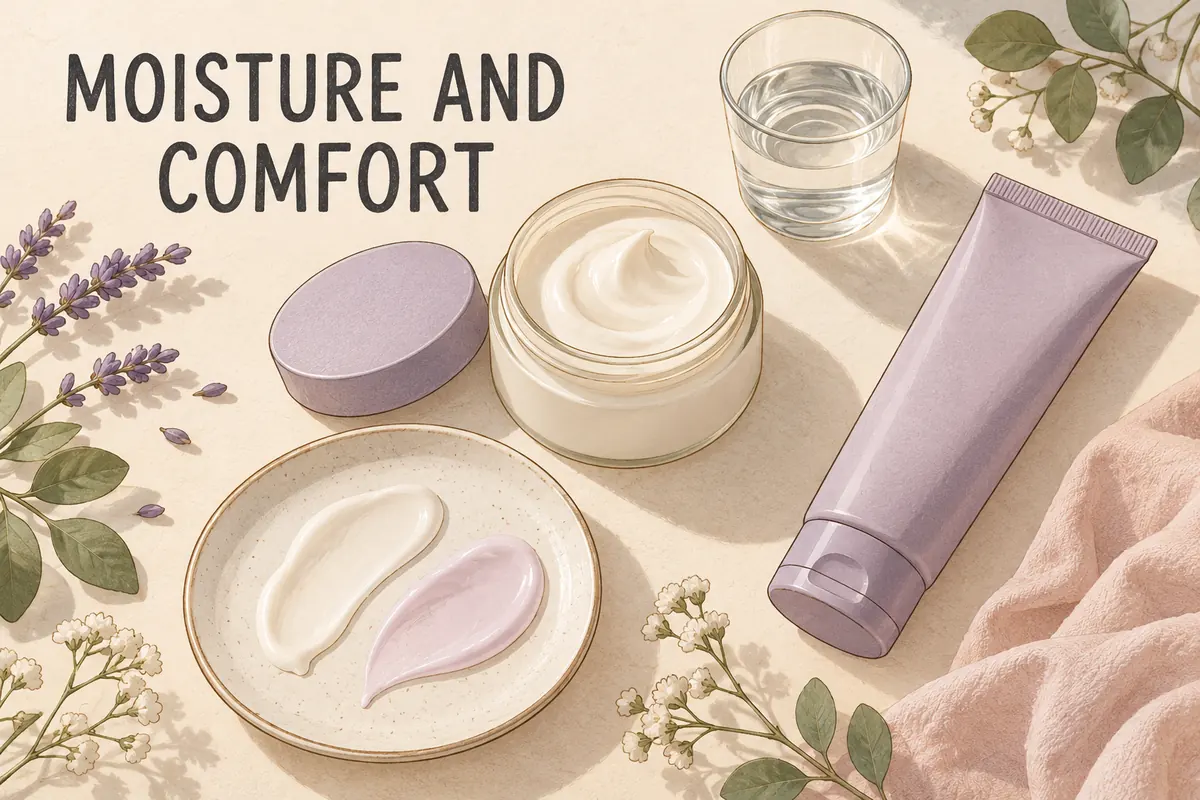
Choose a moisturizer that makes your skin comfortable and is easy to use consistently. Its job is to help manage dryness and smooth the surface. A high price or an anti-aging label does not guarantee a better result.
Humectants, emollients, and occlusives
Humectants such as glycerin attract and hold water in the outer skin. Emollients help soften and smooth it. Occlusive ingredients, such as dimethicone or petrolatum, help reduce water loss. Many moisturizers combine these functions in one formula.
Hyaluronic acid is another familiar hydrating ingredient. You can use a serum if you enjoy it and tolerate it, but it is not an essential separate step. A moisturizer may already supply the ingredients you need. Follow the formula's directions instead of assuming more layers always mean better hydration.
Choose a texture you can live with
A cream may suit skin that stays rough or flaky, while a lighter lotion or gel may feel more comfortable in oilier areas. Adjust by area if necessary. Fragrance-free products can be useful when your skin reacts easily, although no label guarantees that a product will suit everyone.
Apply moisturizer after washing while the skin is still slightly damp, unless the product or a prescribed treatment directs otherwise. If it repeatedly burns, stings, or leaves a rash, review the product and get advice rather than forcing yourself to continue.
A simple morning and evening routine
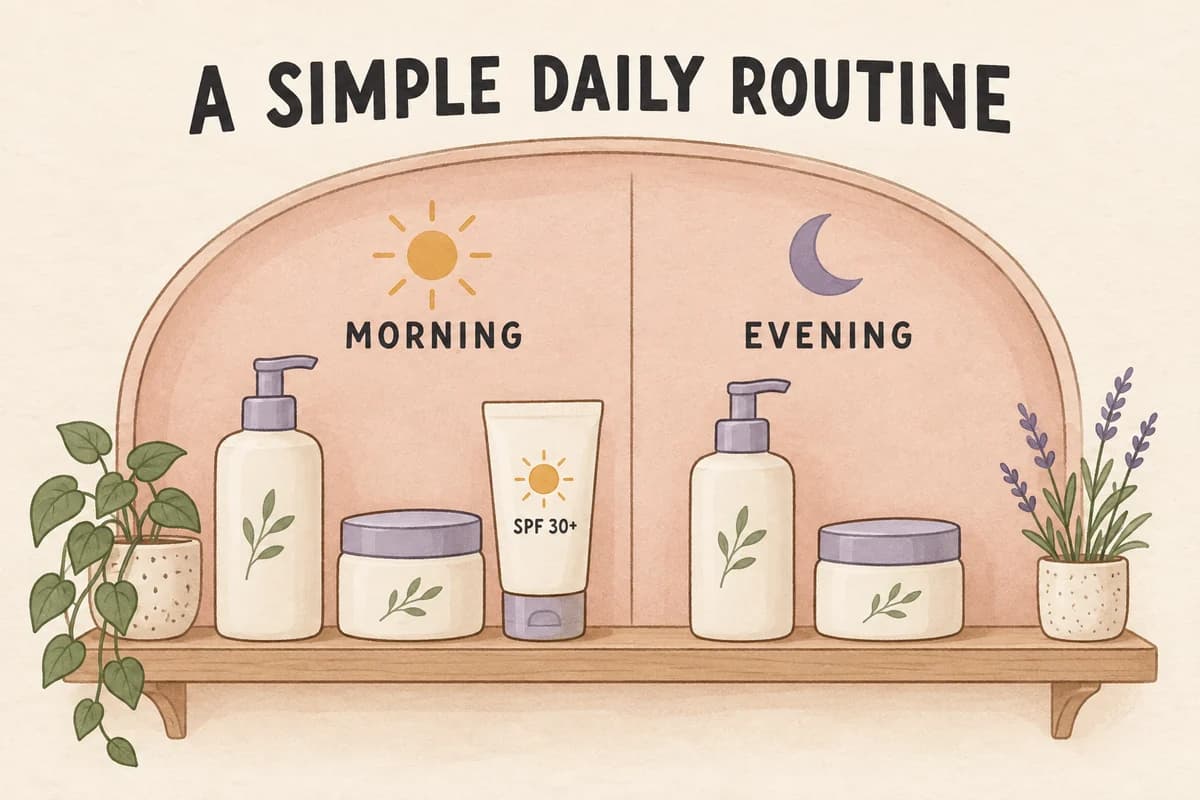
Morning: gentle care and sun protection
Cleanse gently as needed with lukewarm water and a mild cleanser. If your skin is very dry or sensitive, a clinician may suggest a different morning cleansing approach. Avoid scrubbing until your face feels squeaky or tight.
Apply a comfortable moisturizer, then broad-spectrum, water-resistant sunscreen with SPF 30 or higher as directed before going outside. Reapply sunscreen every two hours outdoors and after swimming or sweating, following its label. Add shade, protective clothing, and a hat when appropriate.
For help arranging the steps around makeup or existing products, our morning skincare routine explains moisturizer and sunscreen order in more detail.
Evening: remove the day and moisturize
Remove makeup and sunscreen gently, cleanse without rubbing, and apply moisturizer. Keep any prescribed treatment instructions central to the routine. There is no requirement to add a toner, mask, or special night cream.
Add optional actives only when the basics feel comfortable
A suitable retinoid can improve some fine lines and signs of sun-related aging over time, but it can also cause dryness and irritation. It is optional, not a first response to a suddenly tight or peeling face. Discuss suitability with a dermatologist if you have persistent sensitivity or a skin condition.
Retinoids should not be used during pregnancy. Review treatment choices with your clinician if you are pregnant, trying to become pregnant, or breastfeeding. Use products as directed and introduce changes gradually, rather than starting several active ingredients together.
If the new texture appeared after increasing acids or scrubs, our over-exfoliated skin guide can help you review what changed before adding another treatment.
Under-eye, forehead, and smile lines
Dehydration lines under the eyes
The eyelid skin is thin and sensitive, and dryness can make the area look more creased. Natural expression lines, irritation, and other changes can be present too. Keep products out of your eyes and follow instructions about where a formula can be used.
An eye cream is not automatically necessary, and a face product should not be applied to eyelids if its directions say to avoid the area. Avoid rubbing, stretching, or applying strong exfoliants there. Persistent itching, redness, swelling, or a rash needs assessment rather than repeated wrinkle treatments.
Dehydration lines on the forehead
Your forehead moves whenever you raise your brows or make expressions. Dryness may make its fine lines look more obvious, but seeing a crease there does not identify its cause. Note whether the skin also feels tight or flaky and whether a recent routine change could be contributing.
Smile lines and folds
Lines around the eyes and mouth can reflect ordinary expression and changes in facial support. Moisturizer may improve surface comfort without erasing a fold. A photo taken while stretching your face is not a realistic target for how relaxed skin should look.

Will drinking more water reduce wrinkles?
Adequate fluids matter for your health, but a fine line is not a reliable measure of how much water you need. Dryness in the outer skin and dehydration from a loss of body fluids are related to different clinical questions and should not be treated as interchangeable labels.
A systematic review found limited, low-quality evidence that additional water intake may modestly improve skin hydration, especially in people who previously drank less. It did not establish that drinking extra water erases wrinkles. There is no evidence-based glass-of-water test for classifying a forehead line.
Meet your normal fluid needs rather than forcing extra liters to chase a cosmetic result. Follow any fluid advice you have been given for a medical condition. Moisturizer and sun protection still have useful roles even when you drink enough.
How long does improvement take?
A moisturizer can make some fine lines look softer soon after application. That is an appearance change, not proof that a structural wrinkle has been reversed. Comfort, flaking, and irritation may improve on different timelines depending on their cause.
There is no universal countdown for dehydration lines. Persistent dryness, a poorly tolerated formula, or an underlying skin condition can all affect progress. A line remaining visible after a week or a month does not, by itself, tell you what it is.
Optional treatments for fine lines usually need consistent use over weeks to months, and their results are modest compared with marketing promises. Follow the product instructions and your clinician's review plan. Do not keep increasing the amount or frequency because a crease remains.
If your skin is becoming more uncomfortable, reassess sooner instead of waiting for an advertised deadline. Less tightness and better tolerance are useful signs that a routine fits, even when normal facial lines are still there.
What to track while you adjust your routine
Keep a short record of how your skin feels after washing and later in the day. Note roughness, flaking, stinging, and whether a product is comfortable enough to use consistently. Record when you change a formula or its frequency so you are not relying on memory.
Skinreo keeps your skincare routine and skin photo journal together, so you can look back at the products you used alongside changes in your skin's appearance. Add a note about dryness or comfort to give each check-in context.
Use similar lighting, distance, angle, and expression for photos, with filters off. A picture can document appearance; it cannot measure hydration, collagen, or the cause of a line. Avoid comparing a relaxed face with a stretched or dramatically lit one.
Choose a manageable check-in interval rather than inspecting your skin repeatedly through the day. If close-up comparisons are making you anxious, take them less often. Skin does not need to be line-free for your care to be working.

When to ask a dermatologist
Ask for advice if dryness, itching, peeling, or burning persists despite gentle care, or if even a basic moisturizer repeatedly stings. Painful cracks, a rash, swelling around the eyes, or a change that does not fit your usual skin pattern deserve assessment.
If fine lines or wrinkles bother you after the routine is comfortable, a dermatologist can discuss realistic options. Depending on your skin and goals, these may include topical treatment or selected cosmetic procedures. Ask what each option targets, its risks, downtime, and likely need for repeat treatment. Choosing not to pursue a procedure is also reasonable.
Frequently asked questions
Do I have wrinkles or is my skin dehydrated?
Both can be present. Tightness, roughness, or flaking suggest reviewing your routine for dryness or irritation, but a line's appearance cannot establish its cause. A dermatologist can assess persistent symptoms or uncertainty. You can begin gentle care without diagnosing every crease.
Can dehydration lines be reversed?
Dryness-related fine lines may look less noticeable when the outer skin is better moisturized. Complete disappearance is not guaranteed, and improvement does not mean every underlying wrinkle has been reversed. Normal expression lines and dryness can coexist.
How long does it take for dehydration lines to go away?
There is no fixed timeline. Moisturizer may soften the appearance of some fine lines quickly, while ongoing dryness or irritation can take longer to address. Persistent symptoms should be assessed. A line remaining after a set number of weeks is not a diagnostic test.
Will drinking lots of water reduce wrinkles?
Adequate fluids support your health, but evidence does not show that drinking extra water erases wrinkles. Limited research suggests modest hydration benefits in some people, especially those with lower previous intake. Follow your normal needs and any medical fluid advice rather than forcing extra water.
How can I tell smile lines from dehydration lines?
Smile lines can reflect facial movement and underlying support, while dryness can make fine lines in the same area more noticeable. Observe your skin at rest and during ordinary expressions without stretching it. Location, a pinch test, or one photo cannot reliably separate the causes.
Does hyaluronic acid remove dehydration lines?
Hyaluronic acid can help hydrate the skin and may soften the look of some fine lines. It does not erase every crease or replace sun protection. A separate serum is optional because a moisturizer may already provide suitable hydrating ingredients.
Should I use retinol if my skin looks more lined and dry?
Do not assume that more retinol is the answer to new tightness, peeling, or irritation. Review the routine and ask your prescriber about persistent treatment-related symptoms. A retinoid may suit some fine-line concerns once skin is comfortable, but it should not be used during pregnancy.
Can oily skin have dehydration lines?
Oiliness does not tell you how much water the outer skin holds. Oily skin can also feel dry, tight, or irritated, and dryness can make lines more visible. Choose a comfortable moisturizer and review cleansing habits rather than trying to remove every trace of shine.
Aim for skin that feels comfortable and a routine you can repeat. Moisturizer and sun protection are useful whether dryness, wrinkles, or both are involved, and normal facial lines do not mean you have failed to care for your skin.
References
Sources accessed October 27, 2026.
- American Academy of Dermatology: Wrinkle remedies
- American Academy of Dermatology: How to select anti-aging skin care products
- Mayo Clinic: Wrinkles symptoms and causes
- Mayo Clinic: Wrinkles diagnosis and treatment
- Mayo Clinic: Dry skin symptoms and causes
- Mayo Clinic: Dry skin diagnosis and treatment
- DermNet: Emollients and moisturisers
- American Academy of Dermatology: How to pick the right moisturizer
- American Academy of Dermatology: Tips for relieving dry skin
- American Academy of Dermatology: How to apply sunscreen
- American Academy of Dermatology: Retinoid or retinol?
- American Academy of Dermatology: Pregnancy skin care
- American Academy of Ophthalmology: Moisturizing the eyelids
- DermNet: Eyelid contact dermatitis
- MedlinePlus: Skin turgor
- Akdeniz et al.: Does dietary fluid intake affect skin hydration in healthy humans? A systematic literature review
Illustrations: Skinreo. Image usage and permissions.