
Skin concerns · Sensitivity
Over-Exfoliated Skin: Signs and How to Reassess Your Routine
When the routine meant to smooth your skin starts leaving it tight, flaky, or uncomfortable, it is time to take a closer look.
TL;DR
- Over-exfoliated skin may feel tight, tender, or sting with products you normally tolerate. Dry flakes, a rash, or new bumps can occur, but these changes have several possible causes.
- Pause cosmetic exfoliants and scrubbing. Keep care simple with a gentle cleanser, a tolerated fragrance-free moisturizer, and sun protection. Ask your prescriber about adjusting prescribed treatments.
- There is no reliable overnight fix or universal recovery deadline. Get medical help for severe, worsening, or persistent symptoms, and wait until your skin is comfortable before considering exfoliation again.
You add an exfoliating toner for texture. A scrub joins the routine on weekends. Then your usual moisturizer starts to sting, your cheeks feel tight, and the flakes you were trying to remove keep returning.
That pattern can happen when exfoliation exceeds what your skin tolerates. The next useful step is to review what changed, reduce irritation, and watch how your skin responds. Buying a stronger exfoliant or several new repair products can make that review harder.
This guide explains what people mean by over-exfoliated skin, which changes deserve attention, and how to make your routine easier to manage.
What does over-exfoliated skin look and feel like?
Over-exfoliation describes irritation associated with using exfoliating products or tools more aggressively than your skin can tolerate. The outer skin barrier helps retain water and protect against outside irritants. Harsh care can interfere with that protection.
For a quick visual explanation, our Short on how the skin barrier works shows why harsh scrubbing can leave skin feeling uncomfortable.
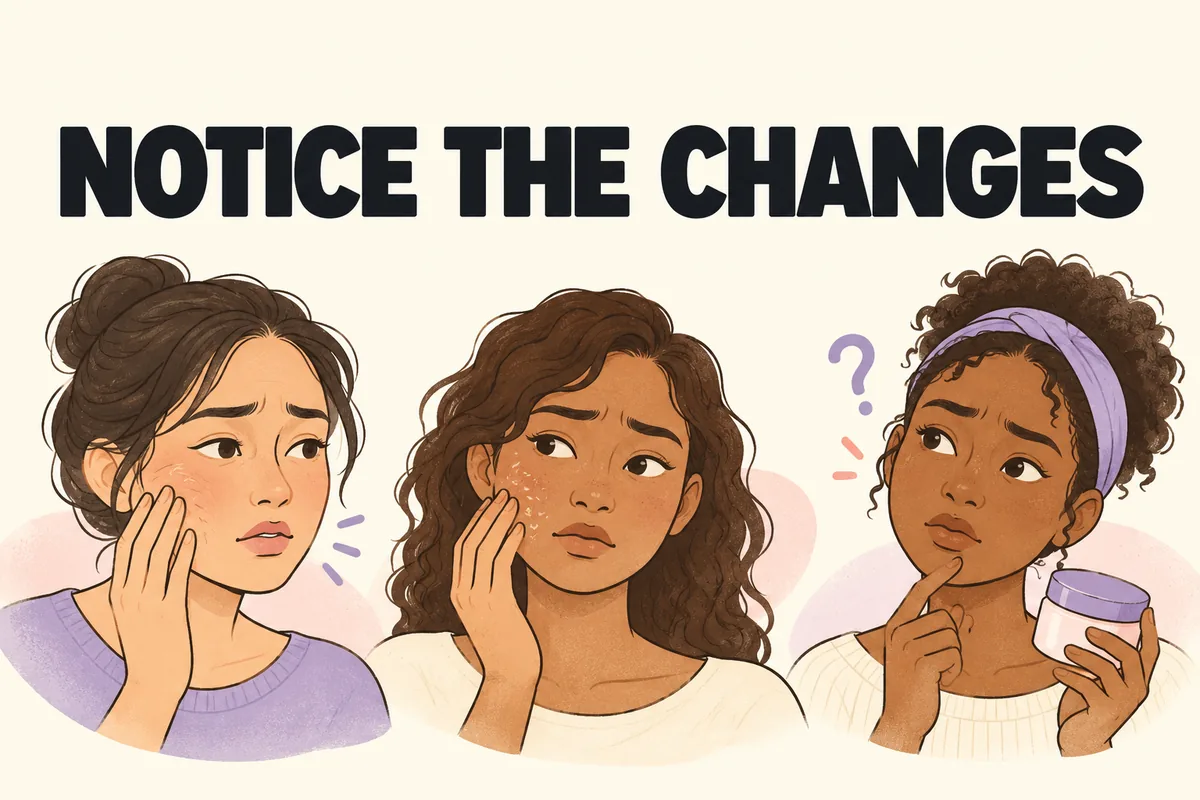
Look at changes from your own usual skin, especially after a new product, stronger formula, or increase in use. A checklist cannot confirm the cause, but these are reasons to reassess:
- Burning, stinging, or tenderness during or after your routine.
- Dryness, rough patches, peeling, or an uncomfortable tight feeling.
- Redness or other changes in color, sometimes alongside a rash or swelling.
- New sensitivity to products that previously felt comfortable.
- An unusually shiny surface that still feels tight or dry, or small bumps with irritation.
Redness can be harder to see in deeper skin tones. Pay attention to discomfort, texture, and changes in color as well. A phone photo may miss those sensations, so do not use appearance alone to judge how your skin is doing.
| Change you notice | What it can tell you | A useful next step |
|---|---|---|
| Stinging with familiar products | Your skin has become more reactive; the cause still needs context. | Pause exfoliation and note when the discomfort began. |
| Flakes with tightness or tenderness | More exfoliation may add to the irritation. | Use gentle care and avoid rubbing away the flakes. |
| Bumps after increasing acids or scrubs | Irritation and acne can overlap. | Avoid adding more spot treatments while the skin is sore. |
| Blisters, raw skin, or significant pain | This needs medical attention rather than a routine reset alone. | Contact a clinician promptly. |
How a routine can lead to too much exfoliation
Both physical and chemical exfoliation can irritate skin. Physical methods include gritty scrubs, brushes, and abrasive pads. Chemical exfoliants include products made with glycolic, lactic, or salicylic acid. A cleanser or toner may contain an exfoliant even when its name does not make that obvious.
The total routine matters. An acid cleanser, leave-on exfoliating toner, and scrub may each look like separate steps, yet all add to the same exposure. Irritation may follow one strong application or build gradually with repeated use.
Check for a recent increase in frequency, longer contact time, firmer scrubbing, or several products introduced together. Retinoids and benzoyl peroxide can also make skin more sensitive; they are worth including in the review even though they are not simply another scrub.
Write down the actual product names and directions. “I exfoliate once a week” can leave out a daily acid cleanser. That small detail can change the conversation with a dermatologist.

How to care for skin after over-exfoliating
For mild irritation after cosmetic exfoliation, the immediate aim is a comfortable, manageable routine. If you have blistering, raw areas, or substantial pain, use the medical-help guidance below instead of treating it as ordinary dryness.
Pause exfoliating products and tools
Set aside cosmetic acid exfoliants, peels, scrubs, brushes, and abrasive cleansing pads. Avoid trying to polish off the rough texture. A pause is also an opportunity to stop optional products that clearly sting, including a cosmetic retinol or an acidic serum.
If you use a prescribed acne or other skin treatment, contact your prescriber or pharmacist about the reaction and whether to adjust it. Do not replace a treatment plan with advice from a recovery video.
Cleanse with a light touch
Use a gentle, non-abrasive cleanser and lukewarm water. Apply with fingertips, rinse, and pat dry softly. Long cleansing massages, hot water, and washcloth friction can make an already uncomfortable routine harder to tolerate.
Use a moisturizer you can tolerate
A familiar fragrance-free cream is a reasonable place to start. Apply gently after washing and again when skin feels dry. A cream or ointment may suit very dry areas better than a thin lotion, but choose a texture that feels comfortable on your skin.
You do not need a separate toner, essence, serum, oil, and mask to build a simple skincare routine for sensitive skin. Keeping fewer steps makes it easier to notice which application feels uncomfortable.
Keep sun protection in the routine
Use a tolerated broad-spectrum, water-resistant SPF 30 or higher before going outside, alongside shade and protective clothing. Reapply outdoors every two hours and after swimming or sweating, following the label. If sunscreen stings persistently, ask a clinician to help you find a suitable formula.
This matters particularly after AHA use. The FDA advises sun protection and limiting exposure while using AHA cosmetics and for a week after stopping them.
What to look for in a moisturizer
Focus on the whole formula and your experience using it. Glycerin and hyaluronic acid help attract water; ingredients such as ceramides support barrier-focused formulas. Dimethicone and petrolatum can help reduce moisture loss. A product does not need every one of these to be useful.
Choose a fragrance-free option and avoid a moisturizer marketed primarily for resurfacing while your skin is irritated. A repair label does not tell you whether the product also contains exfoliating acids or whether you will tolerate it.
“Hypoallergenic” is not a guarantee against a reaction. The FDA does not set a federal standard or definition for that term in cosmetics. A short list of fashionable ingredients is not proof that a product is right for you, either.
If an application causes persistent burning or makes the rash worse, stop using that product and get advice. Previously tolerated cosmetics can still become a problem, and an allergy can develop after earlier trouble-free use.
Are the bumps over-exfoliation, acne, or purging?
Small bumps do not identify a single cause. Irritant dermatitis can produce raised spots, and acne can coexist with irritated skin. The fact that bumps appeared after exfoliating is useful history, but it does not establish what they are.
A common mistake is treating every new bump as a clogged pore that needs more acid. If the same area is burning, peeling, or sore, increasing exfoliation adds another variable when you already have a reason to pause.
Our guide to skin purging vs. breakouts explains why the product you started, where blemishes appear, and accompanying symptoms all matter. Persistent stinging, a spreading rash, or swelling should not be dismissed as a sign that a product is working.
Arrange an assessment if bumps are persistent, painful, itchy, or difficult to distinguish. Avoid self-prescribing an antifungal, steroid, or a stronger peel based on pictures in a forum thread.
Why your skin may still be flaky after exfoliating
Flakes are not always a signal that you need to remove more dead skin. Dry skin and dermatitis can both cause scaling. Repeatedly scrubbing that surface may leave it more uncomfortable without addressing why it is flaking.
Leave loose skin alone, moisturize gently, and avoid picking. If flakes keep returning despite a simpler routine, particularly with itching, cracking, or a recurring rash, have the cause checked. Dryness, eczema, and product reactions can need different approaches.
Think about the sequence: did the flakes come first, or did they start after you increased exfoliation? Bring that detail to an appointment. It is more useful than assuming every rough patch is buildup.
How long does over-exfoliated skin take to settle?
There is no single recovery time that applies to every reaction. A dermatologist-authored Westlake Dermatology guide notes that mild irritation may improve in days, while more severe symptoms can take weeks or longer. The cause, severity, and continued exposure all affect the course.
An overnight moisturizer may make dryness feel more comfortable, but it cannot promise complete healing by morning. Be wary of a fixed three-day reset or a before-and-after photo presented as a deadline for your own skin.
Useful signs of progress are less discomfort during ordinary care, less tenderness, and a gradual return toward your usual texture. One good morning is not a reason to immediately repeat the routine that caused the problem.
If symptoms are not improving after removing the suspected irritant, keep coming back, or remain difficult to manage, seek advice. You do not have to wait out an online recovery timetable before asking for help.

When to get medical help
Seek prompt medical care for a painful or rapidly spreading rash, blisters, open sores, raw skin, fever, or symptoms involving your eyes or mouth. Pus, worsening warmth, swelling, or yellow crusts can be signs of infection. Trouble breathing or swallowing, or swelling of the eyes or lips, needs immediate emergency care.
A strong chemical peel reaction deserves particular caution. The FDA warns that high-concentration peel products used without appropriate professional supervision can cause serious burns, infection, scarring, and changes in skin color.
For ongoing milder symptoms, a dermatologist can consider irritant dermatitis, an allergy, eczema, rosacea, or another cause. Take your products or ingredient lists and explain the order and frequency of use. Medical patch testing may help when an allergy is suspected.
When and how to consider exfoliating again
Wait until your skin feels comfortable with its basic routine and the irritation has resolved. Ask a dermatologist first if symptoms were significant, you have a recurring skin condition, or you use prescribed treatments. Exfoliation is optional, and some skin does better without an extra exfoliating step.
If you decide to restart, choose one product, follow its directions, and use it less often than the routine that preceded the irritation. Do not restart the acid toner, scrub, and retinol together. Watch how the individual change feels before considering another.
For a new skincare product, the American Academy of Dermatology recommends a small-area test over seven to ten days before broader use. Follow the product’s directions and exposure time; a rinse-off product should not become an overnight test. Avoid testing on already irritated skin.
A home product test cannot rule out every reaction and is different from medical patch testing. Do not deliberately re-test a product that caused a severe reaction without clinical guidance.
What to track as your routine changes
Keep a short record of what you used, when you used it, and how your skin felt afterward. Include the cleanser and sunscreen as well as the obvious exfoliants. Note any scrubbing tools, professional treatments, or changes to prescribed products.
- Product name, amount, frequency, and whether it was rinsed off.
- When tightness, stinging, itching, flaking, or bumps appeared.
- What you paused and whether ordinary care became more comfortable.
Skinreo keeps your skincare routine and skin photo journal together, so you can record routine changes alongside check-in photos. Add notes about how your skin feels, too. Photos can help you revisit visible changes, but cannot identify an allergy or measure whether your skin barrier has recovered.
Once things settle, keep your morning skincare routine easy to repeat. A clear record and a consistent basic routine make the next product decision less of a guessing game.
Frequently asked questions
How do you heal over-exfoliated skin?
Pause cosmetic exfoliants and scrubbing, simplify your routine, and use gentle cleansing, a tolerated fragrance-free moisturizer, and sun protection. Ask your prescriber about any prescribed treatments. Painful, blistering, worsening, or persistent symptoms need medical assessment rather than more trial-and-error products.
How can you tell if your skin is over-exfoliated?
Look for new stinging, tenderness, tightness, flaking, color changes, or bumps after increasing exfoliation. These clues suggest reviewing your routine, but do not confirm the cause. A product allergy or another skin condition may look similar.
What is the best moisturizer for over-exfoliated skin?
There is no single best formula for everyone. A tolerated fragrance-free cream without an added exfoliating treatment is a practical starting point. Texture, the full ingredient list, and your own response matter more than a repair claim on the jar.
Why is my skin still flaky even after exfoliating?
Scaling can come from dryness or dermatitis, so more exfoliation may worsen the irritation. Avoid rubbing or picking the flakes. Persistent scaling, especially with itching, cracking, or a rash, is a reason to have the cause checked.
Can you heal over-exfoliated skin overnight?
There is no reliable overnight cure. Gentle care may ease discomfort, but comfort after one application does not prove the reaction has resolved. Avoid strong treatments or several new products intended to speed things up.
Can over-exfoliation cause bumps that look like acne?
Irritation can include raised spots, and acne can occur at the same time. Bumps alone cannot distinguish acne, dermatitis, or a product reaction. Avoid adding more exfoliant to sore skin, and seek advice for ongoing or painful bumps.
Should moisturizer sting while your skin recovers?
Stinging can happen when skin is irritated, but it is not proof that a moisturizer is repairing it. Stop a product that causes persistent burning or makes symptoms worse. Get advice if even a simple routine remains uncomfortable.
How often should you exfoliate after your skin settles?
There is no universal schedule. If exfoliation is appropriate for you, use one product according to its directions and begin less often than before. Your skin’s tolerance and other treatments matter. Recurring irritation may mean the product or the extra exfoliating step does not suit you.
A useful routine is one you can follow comfortably. Give your skin space to settle, keep a clear record of changes, and get help when the reaction needs more than simpler skincare.
References
Sources accessed October 22, 2026.
- American Academy of Dermatology: How to safely exfoliate at home
- Cleveland Clinic: How to tell if your skin barrier is damaged
- DermNet: Irritant contact dermatitis
- DermNet: Contact reactions to cosmetics
- American Academy of Dermatology: Face washing 101
- American Academy of Dermatology: Dermatologists’ top tips for relieving dry skin
- American Academy of Dermatology: How to apply sunscreen
- FDA: Alpha hydroxy acids
- FDA: Hypoallergenic cosmetics
- American Academy of Dermatology: Rash 101 in adults
- FDA: Chemical peel skin products and professional supervision
- Westlake Dermatology: Over-exfoliation warning signs, causes, and prevention
- American Academy of Dermatology: How to test skin care products
Illustrations: Skinreo. Image usage and permissions.