
Skin concerns · Dryness and dehydration
Dry vs. Dehydrated Skin: Differences and Routine Basics
Understand what oil, water, and your skin barrier have to do with that tight, flaky feeling, then choose a routine that keeps your skin comfortable.

TL;DR
- Dry skin and dehydrated skin overlap. A dry skin type tends to produce less oil, while “dehydrated skin” describes low water content at the surface. Medically, dry skin also involves too little moisture.
- Shiny skin can still feel tight or become dry and irritated. Appearance, a pinch test, or a selfie cannot reliably tell you what is causing the discomfort.
- Start with gentle cleansing, a moisturizer suited to your skin, and daytime sun protection. Persistent burning, cracking, or a rash deserves professional attention.
Your cheeks feel tight, your forehead looks shiny, and your moisturizer seems to help for only a little while. Does that mean your skin is dry, dehydrated, or both?
The distinction can help you think about your routine, but it is less clear-cut than many product labels suggest. You do not need to solve an oil-versus-water puzzle before giving uncomfortable skin gentler care. Here is how to compare the terms, notice useful patterns, and decide what to change.
Dry vs. dehydrated skin: what is the difference?
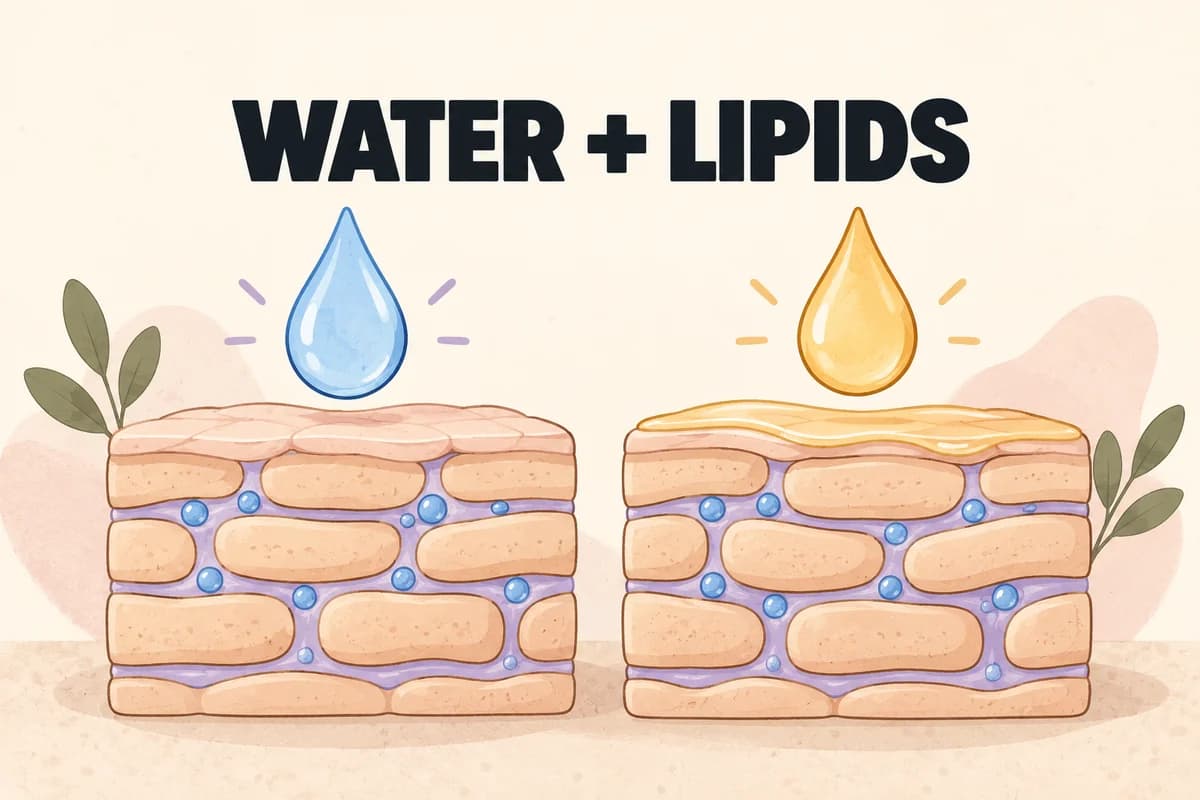
In everyday skincare language, dry usually describes a skin type that makes less sebum, the oil produced by your skin’s oil glands. Dehydrated usually describes a change in the amount of water in the outermost skin layer. That is why people often summarize the difference as oil versus water.
The medical meaning of dry skin is broader. Dry skin, also called xerosis, involves reduced moisture in the stratum corneum, your outer layer of skin. Its ability to hold water and the lipids within that layer both matter. Dry skin is not a condition in which water levels are automatically normal.
Think of the two terms as overlapping descriptions rather than separate diagnoses. Someone with naturally dry skin can lose additional moisture during winter. Someone with an oily T-zone can develop dry, irritated cheeks after using a harsh cleanser. The practical goal in both cases is comfortable skin that holds moisture more effectively.
| What to compare | Dry skin | Dehydrated skin |
|---|---|---|
| Meaning in skincare | Often describes a tendency toward lower oil production and recurring dryness. | Describes skin with reduced water content, including skin that is oily. |
| Possible clues | Roughness, flaking, itch, tightness, or cracking. | Tightness, roughness, dullness, or more noticeable fine lines; shine may still be present. |
| Overlap | Dry skin can also lack water. Dryness can develop with weather, age, products, or skin conditions. | These signs are not specific to dehydration and may reflect dryness or irritation. |
| Useful starting point | A gentle cleanser and a comfortable cream; richer textures may suit very dry areas. | Gentle cleansing and a moisturizer that supplies hydration and helps reduce water loss. |
How can you tell if your skin is dry or dehydrated?
Look for patterns rather than one symptom
Roughness, flakes, itching, and more visible fine lines can occur when skin loses moisture. Tightness after washing is another useful observation, especially if it happens repeatedly. None of these signs identifies a single cause on its own.
A longer history of dryness, including dry areas elsewhere on your body, may suggest a recurring tendency. A noticeable change after a new cleanser, cold weather, or an increase in exfoliation makes those recent exposures worth reviewing. These are clues for a conversation or routine review, not a home diagnosis.
- Where is the discomfort? Note whether it affects your cheeks, around your mouth, your whole face, or other body areas.
- When does it happen? Compare how your skin feels after cleansing, later in the day, and after moisturizer.
- What changed beforehand? Record new products, treatment frequency, weather, or longer hot showers.
On darker skin tones, redness can be less obvious. Pay attention to texture, burning, itch, and changes from your usual skin color, too. A photo may document appearance, but it cannot show all of those sensations.
A pinch test cannot settle this question
Skin turgor describes how skin returns to its usual shape after being lifted. Clinicians may assess it when evaluating fluid loss, alongside other findings. Skin elasticity also changes with age and other factors. A cheek-pinch test cannot reliably distinguish a dry skin type from low surface hydration, or rule out a skin condition.

Can oily skin be dehydrated or feel dry?
Yes. Surface oil and moisture are different aspects of skin, so shine does not guarantee that your skin feels comfortable or has enough water in its outer layer. Oily or acne-prone skin can also become dry and irritated during treatment.
Benzoyl peroxide, salicylic acid, and retinoids can cause dryness or irritation. If you use one, moisturizer may help you tolerate the treatment. Choose a formula labeled noncomedogenic or oil-free if you are prone to breakouts, and follow your treatment instructions.
For example, a shiny forehead with tight cheeks does not mean every area needs a stronger oil-control product. A light moisturizer may feel comfortable on the forehead while a cream suits the cheeks. Adjust to each area instead of repeatedly washing away all visible shine.
Shine alone does not prove that your skin is “compensating” for dehydration. If a prescribed acne treatment is making your skin persistently sore or flaky, ask the prescriber how to adjust the routine rather than adding several new products.
What can make skin lose moisture?
Low humidity, cold weather, and indoor heating can make dryness more noticeable. Long, hot showers and harsh soaps can remove oils and fats that help protect the skin. Age, medications, and conditions such as eczema can also contribute.
Irritation adds another layer. Repeated friction, scrubbing, strong cleansers, and multiple irritating products can damage the surface faster than it can recover. Burning or a rash after a product should not simply be labeled dehydration.
If discomfort started after increasing acids, scrubs, or exfoliating tools, review the signs of over-exfoliated skin before trying another exfoliant to remove the flakes.
Write down the sequence: what you introduced, how often you used it, and when symptoms began. An ingredient list can be useful, but the amount, frequency, and combination of products matter as well.
How to choose a moisturizer for dry or dehydrated skin
A moisturizer can combine several functions in one formula. You do not necessarily need a hydrating toner, serum, facial oil, and cream to cover them.
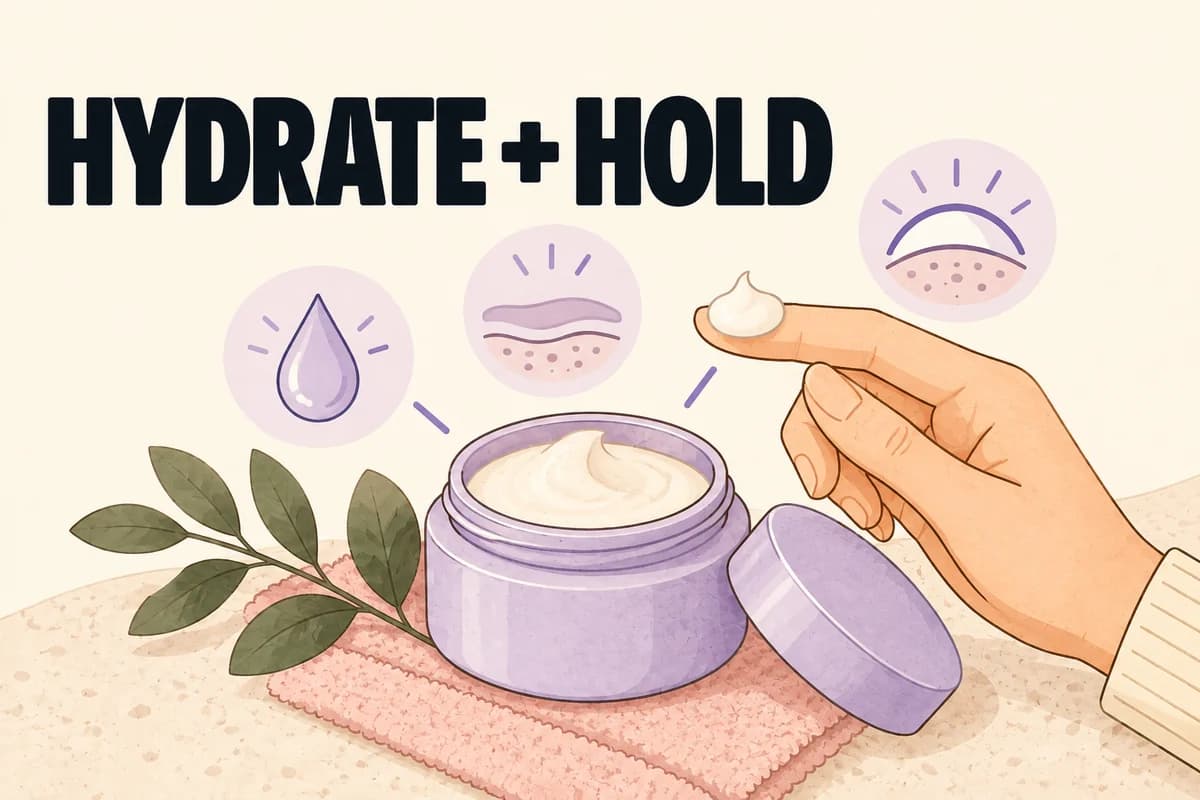
- Humectants attract and retain water in the outer skin layer. Glycerin and hyaluronic acid are common examples.
- Emollients soften and smooth rough skin. They help a formula feel comfortable and improve the feel of dry areas.
- Occlusives reduce water loss by forming a protective layer. Examples include petrolatum, mineral oil, and dimethicone.
Choose the texture you can comfortably use
Creams and ointments are generally more useful than thin lotions for very dry skin. A gel or lighter lotion may be easier to wear on oily areas. Ceramides are another ingredient to look for in a moisturizer that supports the skin barrier.
Start with a fragrance-free formula and judge the whole product by how your skin tolerates it. One fashionable ingredient is not a guarantee of a good fit. Urea and acidic preparations can sting on cracked or irritated skin, so an exfoliating acid is not an automatic solution to dryness.
Do you need a serum or facial oil?
A hydrating serum is optional. If you already use one comfortably, it can sit beneath moisturizer, following the product directions. If your current moisturizer keeps your skin comfortable, there is no need to add a serum just because a label says “dehydrated.”
Facial oil can help soften skin or reduce moisture loss, depending on its formulation, but oil alone does not provide the same combination as a well-formulated moisturizer. Avoid replacing a comfortable cream with several new layers at once.
A simple morning and evening routine
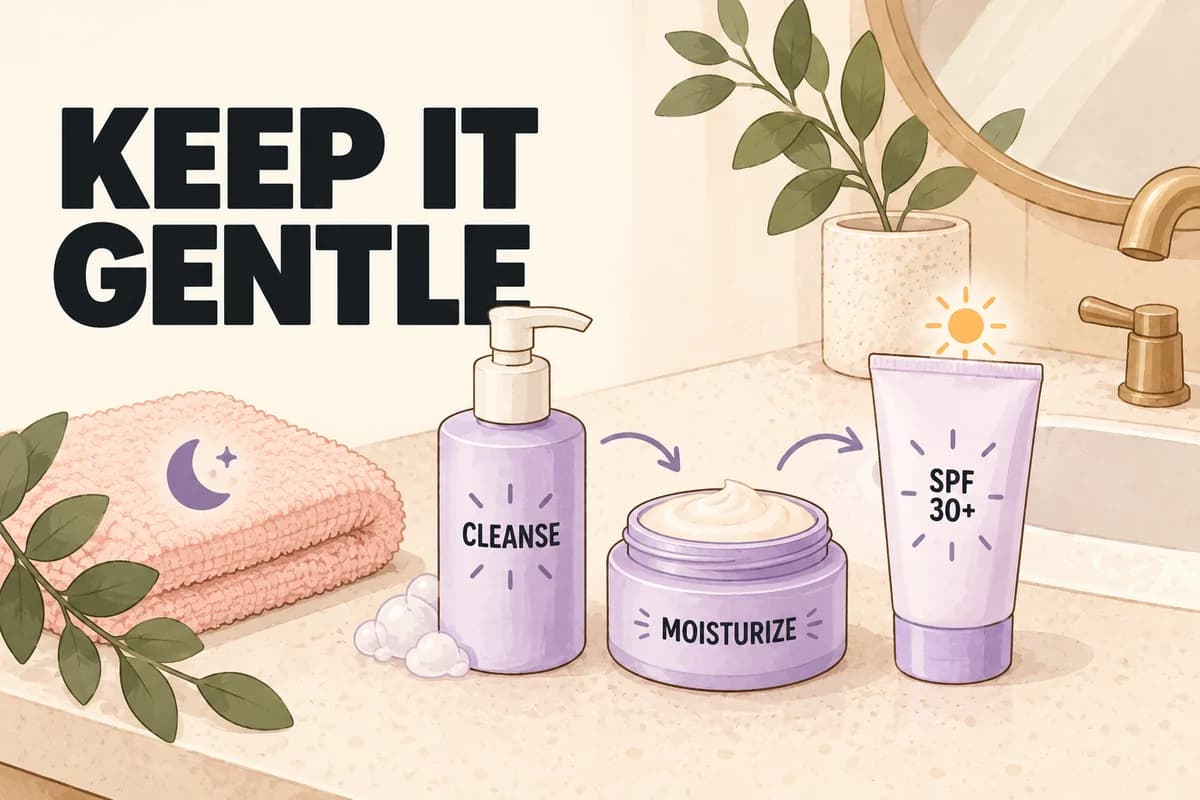
Morning: cleanse gently, moisturize, protect
Use a gentle cleanser and lukewarm water, applying it with your fingertips rather than a brush or scrub. If morning cleansing makes sensitive skin uncomfortable, a water rinse may be sufficient; keep a proper evening cleanse to remove the day’s products.
Gently pat away excess water and apply moisturizer while your skin is still slightly damp. Use the texture that leaves the area comfortable. If you use medication, follow its application instructions, including whether it needs dry skin.
Finish with broad-spectrum, water-resistant SPF 30 or higher on exposed skin. Use shade and protective clothing too, and reapply sunscreen outdoors every two hours and after swimming or sweating, according to the label.
For product order and adjustments under makeup, our morning skincare routine explains how to keep the daytime steps simple.
Evening: remove the day and replace moisture
Remove makeup and sunscreen with a gentle cleansing approach that works for the products you wear. Rinse thoroughly with lukewarm water, pat gently, and apply moisturizer. Avoid adding extra cleansing passes just to make skin feel squeaky clean.
If only certain areas remain dry, use a richer moisturizer there rather than making every step heavier. Keep the routine manageable enough to repeat.
When your skin reacts easily to new products, a simple skincare routine for sensitive skin provides a useful framework for choosing and introducing them.
Common mistakes that can keep skin feeling tight
- Scrubbing off flakes. Flaking can be a sign of moisture loss or irritation; more friction may make the discomfort worse.
- Using a stronger cleanser because the skin still looks shiny. Comfortable cleansing does not require removing every trace of surface oil.
- Adding several products at once. If your skin reacts, it becomes difficult to identify which change mattered.
- Continuing through persistent burning. Stop a new cosmetic that causes an ongoing reaction and seek advice if symptoms persist.
A face mist or watery layer may feel refreshing, but it should not distract from a moisturizer that helps retain moisture. Likewise, a thick product is not automatically better if it feels uncomfortable or repeatedly causes breakouts. Choose care that you can use consistently.
When the air in your home is very dry, a humidifier may help. Follow its cleaning instructions. Keep showers short and warm, and use a soft towel without rubbing.
Will drinking more water fix dry skin?
Staying adequately hydrated is important for your health, but extra water is not a proven stand-alone treatment for dry facial skin. A systematic review found limited, low-quality evidence that additional water may improve skin hydration, particularly in people who previously drank less. It did not establish a dependable cure for dryness.
Drink fluids regularly and account for heat, exercise, or illness. If a clinician has given you a fluid limit, follow that guidance. There is no need to force a large daily water target solely because your cheeks feel tight.
The skincare term “dehydrated skin” also does not automatically mean whole-body dehydration. Thirst, dry mouth, dark urine, or urinating less than usual point to a different question. Persistent dizziness when standing, very little urine, or difficulty keeping fluids down needs prompt medical advice.
How long does dry or dehydrated skin take to improve?
There is no reliable overnight fix or universal recovery clock. Moisturizer can make skin feel more comfortable, but the course depends on the cause, how irritated the skin is, and whether the trigger continues.
For ordinary dryness that responds to self-care, the American Academy of Dermatology notes that improvement is often noticeable within about two weeks. That is a useful point to reassess, rather than a promise that every concern will clear by then.
Look for changes such as less tightness after washing, fewer rough patches, or less itching. A single shiny or dull-looking photo is less useful than a consistent pattern. Seek advice sooner if symptoms are painful, worsening, or accompanied by a rash.
What to track as your skin becomes more comfortable
Keep a short record of your routine and how your skin feels. Useful notes include tightness after cleansing, itching, flaking, burning, and whether the discomfort returns before your next application of moisturizer.
Skinreo keeps your skincare routine and skin photo journal together, so you can look back at what you used alongside changes in your skin’s appearance. Add a note about comfort or a recent routine change to give each check-in more context.
Use similar lighting, distance, and timing for photos when possible. Record a new product’s start date and how often you use it. Photos can help you notice a pattern, but they cannot measure skin hydration or diagnose the reason for dryness.
For example, “less tight after washing for the past few mornings” is a more useful note than “looks better today.” Keep observations brief enough that tracking stays helpful instead of becoming another complicated skincare task.

When to see a dermatologist
Arrange an assessment if dryness keeps returning, does not improve with gentle care, or comes with persistent itching, burning, or a rash. Eczema, contact dermatitis, and other conditions can resemble a simple moisture problem and may need different treatment.
Get medical advice sooner for painful cracks, bleeding, or raw skin. Increasing warmth, swelling, yellow crusts, or drainage can suggest infection and should be checked promptly.
You do not need to arrive knowing whether your skin is dry or dehydrated. Bring your product list, any medications you use, and a brief timeline. That information helps a clinician work out what is happening and recommend care that fits.
Frequently asked questions
Can your skin be dry and dehydrated at the same time?
Yes. The terms overlap: a dry skin type can also have reduced water content in its outer layer. A moisturizer that combines hydrating ingredients with ingredients that reduce water loss can address both needs.
Can oily skin be dehydrated?
Yes. Surface oil does not tell you how much water the outer skin layer contains. Oily skin can also become dry or irritated, especially with harsh cleansing or drying acne treatments. A light, noncomedogenic moisturizer may be a comfortable option.
What does dehydrated skin look like?
It may look rough, dull, or show more noticeable fine lines, and it can feel tight. These signs also occur with dry or irritated skin. Appearance alone, including a selfie, cannot reliably identify the cause.
Is the pinch test accurate for dry vs. dehydrated skin?
It cannot reliably make that distinction. A skin-turgor check relates to elasticity and may be one part of a clinical assessment for fluid loss. Age and other factors affect elasticity, so a cheek-pinch result is not a skincare diagnosis.
Is hyaluronic acid enough for dehydrated skin?
Not necessarily. It is a humectant that helps retain water, but the complete formula matters. A moisturizer may already provide humectants and ingredients that reduce water loss, making a separate hyaluronic acid serum optional.
Will drinking more water fix dry skin?
Extra water is not a proven cure. Adequate fluid intake supports health, and additional water may modestly improve hydration in some people who drank less before. Gentle cleansing and a suitable moisturizer still matter for surface dryness.
How long does it take to rehydrate skin?
There is no fixed timeline. Everyday dryness that responds to self-care often starts improving within about two weeks, but irritation or a skin condition can take a different course. Seek advice earlier for worsening, painful, or persistently inflamed skin.
Should you exfoliate dry or flaky skin?
Avoid scrubbing or adding exfoliation when skin is tight, sore, or irritated. Moisture loss can cause flakes, and more exfoliation may worsen the problem. Start with gentle care and get persistent scaling assessed rather than repeatedly trying to remove it.
Use the dry-versus-dehydrated distinction to ask better questions about your routine, not to chase a perfect label. Comfortable cleansing, a suitable moisturizer, and consistent sun protection are a practical place to begin.
References
Sources accessed October 23, 2026.
- American Academy of Dermatology: Dry skin overview
- American Academy of Dermatology: Dry skin signs and symptoms
- American Academy of Dermatology: Dry skin causes
- American Academy of Dermatology: Dermatologists’ tips for relieving dry skin
- American Academy of Dermatology: How to pick the right moisturizer
- American Academy of Dermatology: How to control oily skin
- American Academy of Dermatology: Moisturizer and acne
- American Academy of Dermatology: Face washing 101
- American Academy of Dermatology: Skin care on a budget
- DermNet: Dry skin
- DermNet: Emollients and moisturisers
- DermNet: Irritant contact dermatitis
- Mayo Clinic: Dry skin diagnosis and treatment
- MedlinePlus: Skin turgor
- MedlinePlus: Aging changes in skin
- Akdeniz et al.: Does dietary fluid intake affect skin hydration in healthy humans? A systematic literature review
- NHS: Dehydration
Illustrations: Skinreo. Image usage and permissions.