
Skin concerns · Breakouts
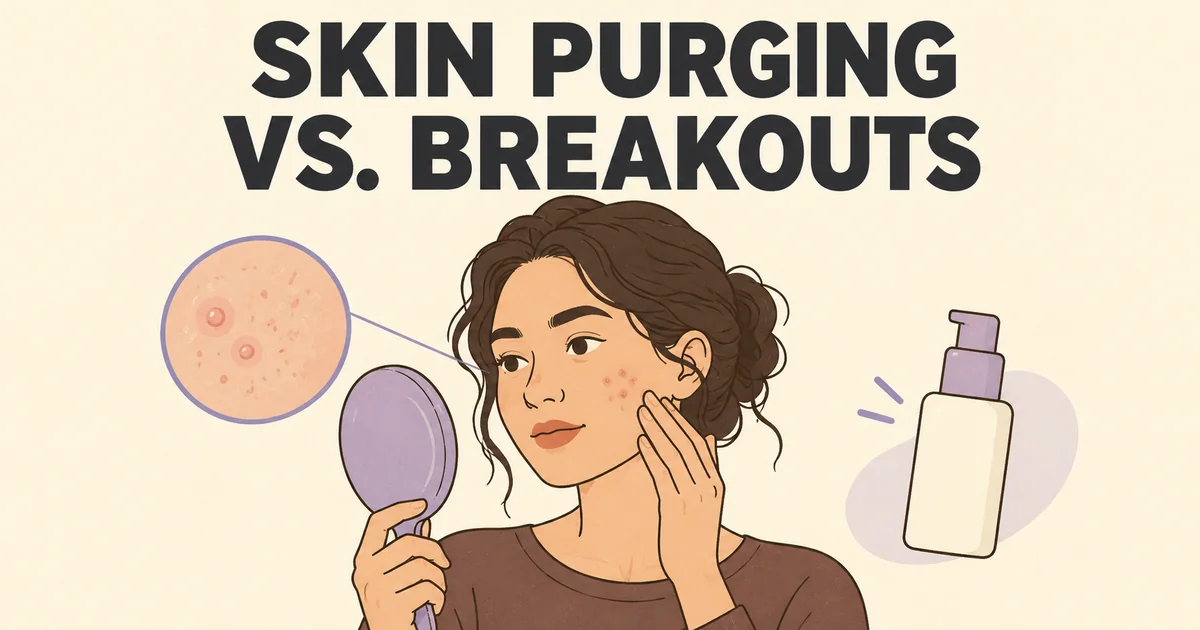
Skin Purging vs. Breakouts: What to Know
A practical guide to new pimples, product reactions, and knowing when your routine needs a closer look.
TL;DR
- Purging describes early acne worsening associated with certain treatments. It is not a necessary stage for every skincare product.
- New pimples alone cannot confirm the cause. Consider the full formula, changes in your routine, discomfort, and the overall pattern.
- Persistent irritation, painful deep lesions, or worsening symptoms deserve advice rather than a fixed waiting period.
You start a new skincare product, hoping for clearer skin. A week or two later, more pimples appear. Should you give it time or put it away?
The difference between skin purging and a breakout comes down to the likely cause. “Purging” describes temporary acne worsening associated with certain treatments. Other breakouts may reflect ongoing acne, a product that does not suit you, or irritation. Timing alone cannot tell you which is happening.
Early worsening is possible with some treatments. Every reaction still needs context.
Get urgent medical help for trouble breathing or swallowing, or sudden swelling of your lips, mouth, throat, or tongue. These are emergency symptoms, not an adjustment period.
Skin purging vs. breakouts: the key differences
Purging still involves acne blemishes. The useful question is why they appeared and whether your skin is tolerating the treatment.
Use the comparison below to organize what you notice. It offers clues, not a diagnosis. Several things can happen together, so a single matching detail is not enough.
| What to consider | Possible treatment-related flare | Other acne breakout | Irritation or possible allergy |
|---|---|---|---|
| Recent change | An acne treatment with recognized early-worsening potential | May follow a product change or occur independently | An irritating exposure or allergen |
| Appearance | Acne blemishes; appearance does not confirm the cause | Whiteheads, blackheads, or inflamed pimples | Rash, scaling, cracking, or swelling may occur |
| How it feels | Check tolerability as well as blemishes | May be tender, particularly deeper lesions | Itching, burning, or soreness deserves attention |
| Timing and pattern | Assess within the specific treatment plan | Can persist or fluctuate with underlying acne | May follow a new exposure or repeated use |
| Next step | Follow directions; ask about worsening or poor tolerance | Review triggers and treatment response | Stop a reacting cosmetic; seek advice for significant symptoms |
What is skin purging and which products can cause it?
“Skin purging” is a common term for an initial increase in blemishes after starting certain acne treatments. Retinoids affect skin-cell processes and help treat clogged pores. However, the term is often used too loosely online, including for reactions that need a different response.
Purging is not evidence that your skin was dirty or needed to release toxins. Acne develops through processes involving clogged pores, oil, bacteria, and inflammation. A blackhead’s dark color is not trapped dirt.
Retinoids and exfoliating acids
Adapalene and tretinoin are topical retinoids used for acne; retinol and retinal also appear in cosmetic skincare. These products differ in formulation and instructions, so they should not be treated as interchangeable.
The adapalene/benzoyl peroxide label acknowledges early worsening. That does not establish the same expectation for every serum or exfoliant.
Salicylic acid exfoliates and helps unclog pores. But new pimples after using an acid do not, by themselves, establish that you are purging. Ingredients, application, symptoms, and your existing acne all matter.
Check the full formula
The words “cleanser,” “moisturizer,” or “serum” tell you how a product fits into a routine. They do not tell you everything it contains.
A cleanser containing salicylic acid is different from a plain cleanser. Likewise, a moisturizer containing retinol is different from a simple hydrating cream. Look at the ingredient list and directions before borrowing advice about someone else’s product.
Hyaluronic acid, ceramides, niacinamide, or vitamin C on a label do not establish a purging explanation. Even a product chosen for sensitive skin may contain something that irritates your skin.
How can you tell if your skin is purging or breaking out?
Start with the history of the change. A useful assessment combines what you introduced, what happened afterward, and how your skin feels. A photograph or an online description cannot reliably answer all of those questions.
What changed in your routine, and when?
Write down when you started the product, changed its strength, increased application, or restarted after a break. Include any other products added around the same time.
For example, imagine starting a retinoid on Monday and adding an exfoliating toner and a new moisturizer by Friday. New bumps the following week would not identify which change mattered. That is a reason to review the whole routine rather than blame or defend one bottle.
Your skincare may not be the only variable. Hormones influence acne, stress can worsen existing acne, and some skincare or hair products can contribute to breakouts. A new product and a flare can also coincide.
What do the bumps look and feel like?
Whiteheads are closed clogged pores; blackheads have an open surface. Inflamed pimples may appear with or without visible pus. Deeper nodules and cysts can feel tender or painful. These descriptions identify types of blemishes, not why they appeared after a product change.
Someone else’s “purging photo” may resemble your skin without sharing the same cause. Avoid using resemblance, a white tip, or how quickly one spot disappears as a deciding test.
Where are the blemishes appearing, and what is the overall trend?
Note whether the bumps are in familiar areas or somewhere unusual for you. That information is worth sharing with a clinician, but location alone should not settle the question.
Look beyond today’s worst spot. Are new blemishes becoming less frequent? Is discomfort increasing? Are more areas affected? Record those observations separately: fewer pimples and worsening irritation are different changes, and both deserve attention.
Could it be irritation or an allergic reaction instead?
A rash, persistent itching, scaling, cracking, or swelling may point toward dermatitis rather than acne alone. Irritant contact dermatitis can follow repeated exposure to irritating substances; allergic contact dermatitis involves a reaction to an allergen. Their appearance can overlap, and allergy can develop even after previous tolerance.
Retinoids can also cause dryness, peeling, and irritation. Those effects do not prove that acne is being “purged.”
Consider how the skin between blemishes feels. Burning during application, widespread soreness, or an itchy patch is different information from the number of pimples. Do not overlook discomfort just because you cannot see a dramatic color change.
Avoid trying to diagnose an allergy by testing the suspect product again on an already irritated face. Persistent or significant reactions deserve medical assessment; a clinician may recommend formal patch testing when contact allergy is suspected.
How long does skin purging last?
There is no single deadline that tells everyone whether they are purging. The familiar “four to six weeks” answer can blur three different things: early acne worsening, irritation, and the time a treatment needs to improve acne.
These timelines help put that distinction into context:
- Acne improvement: the American Academy of Dermatology says fewer breakouts may become noticeable after four to eight weeks, while clearing takes longer.
- Early irritation: the Differin 0.3% label says dryness, scaling, and burning or stinging are most likely during the first four weeks and often lessen with continued use. Management depends on severity.
- Treatment review: that same label recommends reevaluation if results are not noticed after 12 weeks. This is a treatment checkpoint, not permission to ignore worsening symptoms until then.
Your product’s instructions and your prescriber’s plan take priority over a generic internet calendar. If symptoms are getting worse, seek advice sooner. You do not need to prove whether a reaction deserves the word “purging” before asking for help.
Should you continue, pause, or stop the product?
Base the next step on tolerability and the treatment involved. Continuing a prescribed acne plan, pausing an irritating cosmetic, and responding to a possible allergy are different situations.
If changes are mild and you are following an acne-treatment plan
Follow the directions and any instructions your dermatologist provided. Acne treatment takes time; repeatedly switching products can add irritation and make progress harder to assess.
Extra product can increase irritation without faster results. Ask your pharmacist or prescriber about tolerability adjustments.
If your skin is irritated or the cause is unclear
Stop using a new cosmetic that is causing a skin reaction. If it has just been applied, gently wash it off. Avoid repeatedly testing it while your skin remains irritated.
Keep the rest of your routine manageable:
- Use gentle cleansing rather than scrubbing.
- Use a moisturizer your skin already tolerates and follow sunscreen directions.
- Avoid adding more exfoliants or acne products while assessing the reaction.
- Leave spots alone rather than picking or squeezing them.
For prescribed treatments, contact your prescriber about irritation. Depending on severity, product labeling may recommend moisturizer, less frequent application, or discontinuation. There is no single schedule that suits every medication or reaction.
For future cosmetic additions, testing a small area first can help reveal a reaction. It cannot guarantee that a product will never cause facial acne or replace a dermatologist’s allergy testing.
When to contact a dermatologist and when to get urgent help
Arrange an assessment for deep, painful pimples, scarring, persistent worsening, or acne that is not responding to treatment. You can also ask for help earlier if the uncertainty is affecting you.
Stop the suspected product and seek prompt medical advice for a significant rash, hives, or swelling. Trouble breathing or swallowing, or sudden swelling of the lips, mouth, throat, or tongue, requires emergency help immediately.
What to track while your skin settles
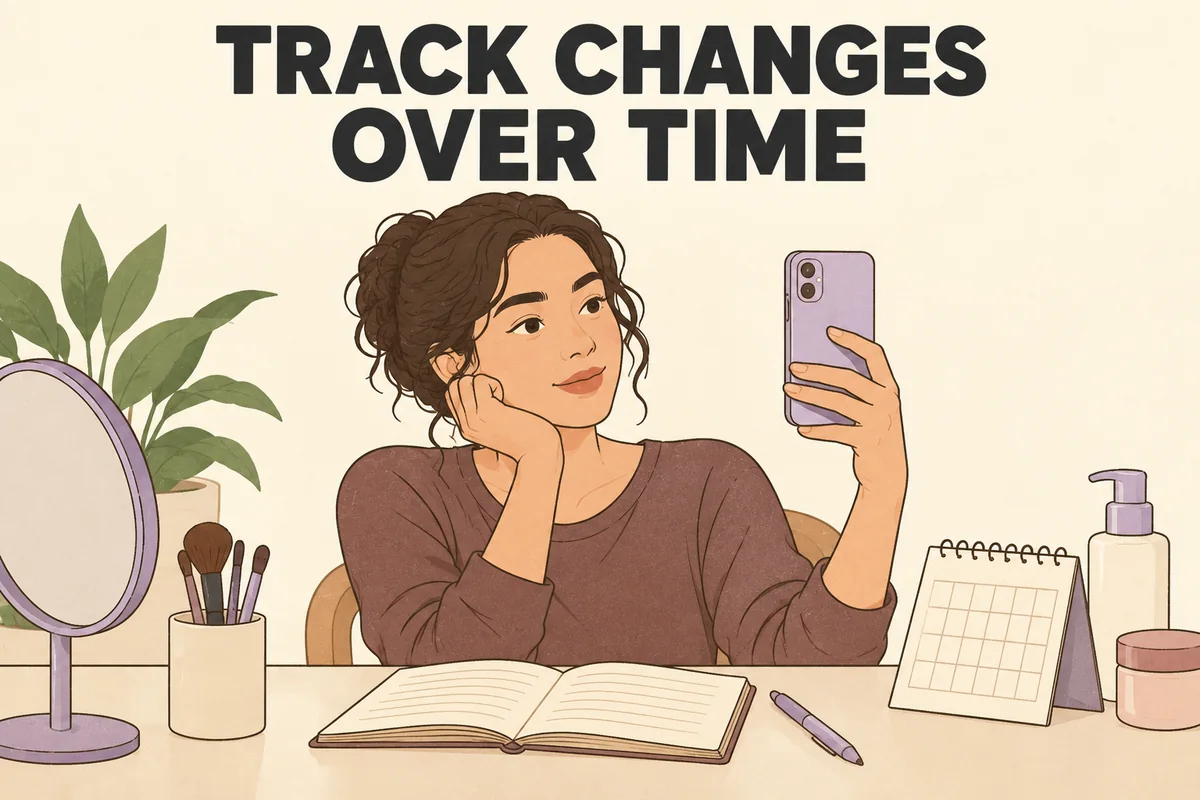
A short record can make the next conversation more useful. Once a week, note the products and application frequency, where new blemishes appeared, and whether you had itching, burning, or soreness. Take photos in similar lighting and from the same angle.
Keep the record factual. “Three new cheek pimples; cleanser stings; started toner Tuesday” gives more information than “bad purge.” Include missed applications and other routine changes, too.
Keeping your photos and routine together can make this easier. Skinreo brings your skin photo journal and skincare routine into one place, so you can look back at your check-ins and follow changes over time.
Photos and notes can document a pattern. They cannot establish the cause on their own. Bring the product names, ingredient lists, and your record to an appointment rather than relying on memory.
Frequently asked questions
Can purging and irritation happen at the same time?
Acne blemishes and treatment irritation can coexist. More pimples do not explain away burning, peeling, or an itchy rash. Assess both changes and follow the product’s tolerability guidance.
Does every retinol user go through a purge?
No. A flare is not a required milestone. Cosmetic retinol products also differ from prescription retinoids; follow the guidance for your product.
Can purging cause deep or painful pimples?
Depth alone cannot establish the cause. New deep, painful lesions warrant assessment because nodules and cysts can scar. Avoid dismissing them as a purge based on when you started a product.
Does skin always get worse before it gets better?
No. Worsening alone does not prove effectiveness. Review the treatment, discomfort, and overall pattern instead of assuming deterioration is necessary.
You do not need to identify the cause perfectly before taking your skin’s discomfort seriously. A clear routine history and timely advice are more useful than trying to endure a reaction until an arbitrary date.
References
Sources accessed October 20, 2026. Medication information applies to the specific products and strengths cited.
- DermNet. Topical retinoids (vitamin A creams).
- DailyMed. Differin Epiduo: adapalene 0.1% and benzoyl peroxide 2.5% gel. Consumer labeling.
- American Academy of Dermatology. Acne: Who gets and causes.
- American Academy of Dermatology. Adult acne treatment dermatologists recommend.
- American Academy of Dermatology. How to test skin care products.
- American Academy of Dermatology. Acne: Signs and symptoms.
- DermNet. Contact dermatitis.
- DailyMed. Differin: adapalene gel 0.3%. Prescribing information.
- American Academy of Dermatology. 9 things to try when acne won’t clear.
- NHS. Anaphylaxis.
Illustrations: Skinreo. Image usage and permissions.