
Routines · Sensitive skin
A Simple Skincare Routine for Sensitive Skin
A practical morning and evening routine, with fewer extras and a clearer way to work out what your skin tolerates.
TL;DR
- Start with a gentle cleanser, a moisturizer you tolerate, and broad-spectrum SPF 30 or higher in the morning. At night, remove sunscreen and makeup gently, then moisturize. Serums, toners, and exfoliants are optional.
- Choose fragrance-free formulas and test new products on a small area before wider use. Add one product at a time so changes are easier to follow; a sensitive-skin label cannot guarantee that a product will suit you.
- Burning, itching, swelling, or a persistent rash calls for a closer look at your routine. Stop a new cosmetic that causes a reaction, and get medical advice for ongoing or significant symptoms.
When your face reacts to products that other people love, building a routine can become an expensive guessing game. A new cleanser feels tight, a moisturizer stings, and another serum makes it harder to tell what changed.
A simple skincare routine for sensitive skin gives each product a clear job: clean gently, keep your skin moisturized, and protect it from the sun. Start with those basics, then decide whether an extra step is useful. This guide shows how to put that into practice without buying an entire new shelf of products.
What is a simple skincare routine for sensitive skin?
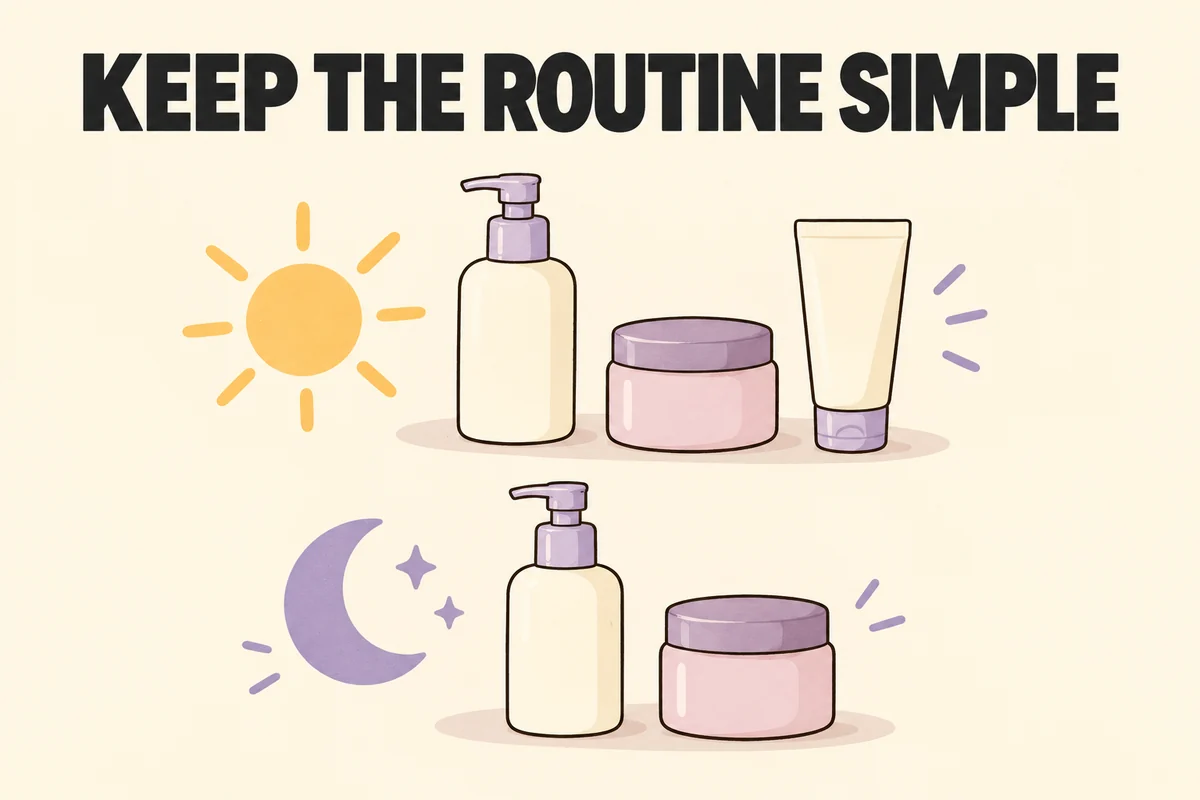
A useful starting routine has three product categories: cleanser, moisturizer, and sunscreen. Use sun protection in the morning; cleanse off the day's products and moisturize in the evening. You can often use the same cleanser and moisturizer at both times.
If you already have products that feel comfortable, keep them. Switching every product at once makes it difficult to judge a reaction. A short routine also gives you a practical reference point before adding an acne treatment or another targeted product.
The table below is a starting framework. If you have eczema, rosacea, an allergy, or a prescribed treatment, build around the advice you have been given for that condition.
| When | Routine order | What to keep in mind |
|---|---|---|
| Morning | Gentle cleanse → moisturizer → sunscreen | Adjust cleansing to your skin and any treatment instructions. Use broad-spectrum SPF 30 or higher; reapply when outdoors. |
| Evening | Remove makeup and sunscreen → gentle cleanse as needed → moisturizer | Removal and cleansing may be one step. Add a separate remover only if your cleanser does not remove what you wear comfortably. |
| If prescribed | Use your medication at the instructed point | Your prescriber's directions take priority over a general routine diagram. |
How do you know if your skin is sensitive?
People use sensitive skin to describe skin that reacts easily, often with stinging, burning, itching, dryness, or visible changes after product use. It is a description of symptoms, rather than a single medical diagnosis. Your skin can feel uncomfortable even when there is little to see.
Sensitivity can occur alongside dry, oily, or combination skin. You can also become irritated after previously tolerating a product. Harsh cleansing, repeated exfoliation, and conditions such as contact dermatitis or rosacea may be part of the picture; appearance alone cannot tell you the cause.
That distinction matters when choosing a routine. Persistent redness, bumps, or a rash should not automatically be treated as ordinary sensitivity, and adding more soothing products does not establish what is causing the problem.
Your morning and evening routine, step by step for sensitive skin
Step 1: Cleanse without scrubbing
Choose a gentle, non-abrasive cleanser. Use lukewarm water and your fingertips, rinse thoroughly, then pat dry with a soft towel. Skip cleansing brushes and gritty scrubs. A squeaky-clean finish is not a useful target if your face feels tight or sore afterward.
In the morning, adjust cleansing to what is on your skin and how it feels. Some people with dry or sensitive skin prefer a water rinse and cleansing in the evening. Follow condition-specific advice if your dermatologist recommends a different schedule, and wash gently after heavy sweating.
At night, remove sunscreen and makeup without repeated rubbing. One suitable cleanser may be enough. If you need a separate remover for water-resistant products, choose one you tolerate and follow its rinsing instructions. Double cleansing is an option for removal, rather than a requirement for every sensitive-skin routine.

Step 2: Apply a moisturizer you tolerate
Look for a fragrance-free moisturizer that leaves your skin comfortable. A cream may suit dry areas; a lighter lotion may feel better on oily areas. Ingredients such as ceramides and hyaluronic acid appear in many moisturizing formulas, but the whole product matters more than one highlighted ingredient.
For dry skin, moisturizing soon after washing can help retain moisture. If applying to damp skin stings, let your face dry first; this is particularly relevant to rosacea-prone skin. Follow medication directions about application and layering. More layers are not necessarily more comfortable.
Step 3: Finish the morning with sun protection
Use broad-spectrum sunscreen with SPF 30 or higher. Water resistance is helpful for swimming or sweating. If your sunscreen stings, a fragrance-free formula containing zinc oxide, titanium dioxide, or both is an option to try. Mineral formulas still need testing; no filter type guarantees that every finished product will suit you.
Apply enough to cover exposed skin evenly, including your face, ears, and neck, following the label. Apply before going outdoors, usually about 15 minutes ahead, and reapply at least every two hours outdoors and after swimming or sweating as directed. Use shade, protective clothing, and a hat as well.
An SPF moisturizer can combine two steps if it provides the hydration you need and you apply the full sunscreen amount. In your morning skincare routine, sunscreen goes on before makeup. If a product combination pills, simplify optional layers rather than reducing your sunscreen dose.
How to choose products for sensitive skin
Read beyond the sensitive-skin label
Fragrance-free is a useful starting preference. Unscented can still mean fragrance ingredients were used to mask an odor. Natural, botanical, and organic descriptions do not make a product automatically less likely to cause a reaction.
Hypoallergenic is not a promise that you cannot be allergic to a cosmetic. The FDA has no federal standard or definition governing that term. Use the label as one piece of information, alongside the ingredient list and your own experience.
Keep optional products purposeful
You do not need toner, essence, eye cream, a facial oil, or several serums to complete the basic routine. If your moisturizer does its job, a separate hydrating serum may add little to your daily process. Begin with the products you need and can use comfortably.
Be cautious with strongly scented products, harsh astringents, and repeated exfoliation. Alcohol-based formulas can feel drying, but not all ingredients with alcohol in their name behave alike. Cetyl, stearyl, and cetearyl alcohol are fatty alcohols, which differ from ethanol. A word-matching blacklist can therefore lead you to reject a formula for the wrong reason.
If you have a confirmed ingredient allergy, follow your clinician's avoidance guidance. Do not remove every preservative or every ingredient that another person dislikes. Product recommendations and online ingredient scores cannot tell you your individual triggers.
Adjust the routine for dry, oily, or acne-prone skin
Dry sensitive skin
Choose a mild cleanser and consider a richer fragrance-free cream if a lotion leaves your skin tight. Keep showers brief and avoid very hot water. Treat flaky patches gently instead of trying to scrub them smooth. If dryness persists despite these changes, or skin cracks and becomes painful, seek advice.
Oily or combination sensitive skin
A lightweight moisturizer and sunscreen may be easier to wear. Look for noncomedogenic or oil-free options if clogged pores are a concern. You can use less moisturizer on an oily forehead and more on dry cheeks while keeping sunscreen coverage even. Repeated washing to remove every trace of shine can increase irritation.
Sensitive acne-prone skin
Keep gentle cleansing, moisturizer, and sun protection around your acne treatment. Avoid starting several acne actives together, and check before adding an exfoliant to a routine that already contains benzoyl peroxide or a retinoid. That combination can increase dryness and irritation.
A noncomedogenic label is helpful when choosing products, but it cannot guarantee that you will never break out. Painful, persistent, or scarring acne deserves a treatment plan. If a prescribed product is making your skin uncomfortable, contact your prescriber about how to use it.
Rosacea or eczema-prone skin
Follow advice for your diagnosed condition rather than repeatedly changing a general sensitive-skin routine. With rosacea, rubbing, exfoliation, and some toners can worsen irritation. With an ongoing itchy rash, identifying a contact allergy or another cause may be more useful than choosing another product advertised as calming.
How to introduce and test a new product
Introduce one product at a time while keeping the rest familiar. The American Academy of Dermatology recommends testing new skincare on a small area, usually twice daily for seven to 10 days, before wider use. Choose a quarter-sized spot such as the underside of your arm or bend of your elbow.
Use the normal amount and follow the product instructions, including rinsing directions. Stop if a reaction develops. Ask a clinician before retrying a product that caused a significant reaction.
Passing a home test cannot guarantee that the product will never irritate your face or contribute to breakouts. Medical patch testing is different: a clinician uses it to investigate suspected contact allergies. If reactions keep happening, ask whether that assessment is appropriate.

What to do when even gentle skincare stings
If a new cosmetic causes burning, itching, swelling, or a rash, gently wash it off and stop using it. A sensitive-skin label is not a reason to continue through a reaction. Avoid adding another new product immediately to counteract the first.
Review recent changes: a new cleanser, an extra acid, more frequent retinol, repeated rubbing, or several products started together. Return to previously tolerated basics where comfortable, and pause optional cosmetic exfoliants while you arrange advice if needed. For medication-related irritation, contact the prescriber.
When water or several previously comfortable products sting, stop the cycle of testing more products and seek medical assessment. There is no reliable universal barrier-repair timetable, and persistent discomfort can have more than one cause. Itching and a spreading rash should not be dismissed as skin purging.
What to track as you build your routine
Keep a short record of the product name, start date, frequency, and how your skin felt. Note where a reaction appeared and whether it followed a change. Include familiar products too, so you can give a clinician a useful history rather than a list of only the newest purchases.
Skinreo keeps your skincare routine and skin photo journal together, so you can revisit your check-ins and follow changes over time. Keeping those records in one place can make it easier to remember what you used and when.
Use similar lighting and camera angles for photos, and add notes about sensations that a picture cannot show. A photo records appearance; it cannot diagnose an allergy or prove which ingredient caused a reaction. Bring your notes and product details to an appointment if symptoms persist.

When to see a dermatologist
Book an assessment for ongoing burning or itching, repeated reactions, persistent facial redness, or a rash that does not settle. A dermatologist can examine the pattern, review your products, and investigate conditions that need more than a routine adjustment.
Get prompt medical care for a painful or rapidly spreading rash, blisters, signs of infection, or a rash with fever. Trouble breathing or swallowing, or sudden swelling of the lips, tongue, or around the eyes, requires emergency help. These are reasons to seek care rather than continue experimenting with skincare.
Frequently asked questions
What do dermatologists recommend for sensitive skin?
A useful starting point is gentle cleansing, a fragrance-free moisturizer, and broad-spectrum SPF 30 or higher, with new products tested before wider use. The details depend on your symptoms and any diagnosed condition. If you keep reacting, a dermatologist can help investigate the cause.
What are the five signs of skin sensitivity?
Common complaints include stinging or burning, itching, tightness or dryness, redness, and flaking. They are examples rather than a diagnostic checklist. Other skin conditions can cause the same symptoms, and sensitive skin does not always have visible redness.
What is the best skincare for a sensitive face?
Start with formulas that meet a specific need and that your skin tolerates. Favor gentle, fragrance-free basics, review the ingredients if you have a known allergy, and introduce products individually. There is no single brand or ingredient that works best for every sensitive face.
Do I need a toner or serum for sensitive skin?
Neither is required for the basic routine. A suitable cleanser, moisturizer, and morning sunscreen may cover your everyday needs. Consider an extra only when it has a clear purpose, and test it before applying it widely.
Can I use retinol or exfoliating acids on sensitive skin?
Some people tolerate them, but they are optional and can cause irritation. Avoid adding them while your skin is already sore or reactive, and check your existing treatment plan before combining actives. Ask a dermatologist whether a retinoid or exfoliant is appropriate for your skin and how to introduce it.
Is a Korean skincare routine suitable for sensitive skin?
It can be, depending on the individual formulas and how many you use. The country associated with a routine does not establish tolerability. Keep the same gentle basics and add optional steps individually rather than assuming that every toner, essence, or serum is necessary.
Should I follow the 4-2-4 rule in skincare?
You do not need a timed cleansing rule to build this routine. Follow your cleanser's instructions and remove what is on your skin gently. Spending longer massaging or rinsing is not automatically helpful when your face is easily irritated.
How long should I try a sensitive-skin routine?
Keep tolerated products consistent and review new additions individually. The seven-to-10-day small-area testing period is not a promise that irritation will resolve in that time. Stop a cosmetic that causes a reaction, and get advice for persistent symptoms instead of waiting for a fixed deadline.
A manageable sensitive-skin routine starts with products you can use comfortably and consistently. Give each step a purpose, make changes individually, and use persistent discomfort as a reason to investigate rather than add more products.
References
Sources accessed October 21, 2026.
- DermNet. Sensitive skin.
- American Academy of Dermatology. Face washing 101.
- American Academy of Dermatology. How to pick the right moisturizer for your skin.
- American Academy of Dermatology. How to apply sunscreen.
- American Academy of Dermatology. How to test skin care products.
- U.S. Food and Drug Administration. Hypoallergenic cosmetics.
- U.S. Food and Drug Administration. Alcohol free cosmetic labeling.
- American Academy of Dermatology. Dermatologists' top tips for relieving dry skin.
- American Academy of Dermatology. How to control oily skin.
- American Academy of Dermatology. How to safely exfoliate at home.
- American Academy of Dermatology. Retinoid or retinol?
- American Academy of Dermatology. 7 rosacea skin care tips dermatologists recommend.
- American Academy of Dermatology. Contact dermatitis diagnosis and treatment.
- American Academy of Dermatology. Patch testing can find what's causing your rash.
- American Academy of Dermatology. Rash 101 in adults: When to seek medical treatment.
Illustrations: Skinreo. Image usage and permissions.