
Skin concerns · Post-acne marks
Acne Marks vs. Acne Scars: Understanding the Difference
A clear guide to leftover color, changes in texture, and choosing a sensible next step after a breakout.
TL;DR
- Acne marks usually describe flat color left after a breakout, such as brown pigmentation or lingering redness. Acne scars involve a change in skin structure, often an indentation or a raised area.
- Marks and scars can occur together. Color, touch, lighting, and photographs offer clues, but an examination may be needed to distinguish them from active acne or another skin condition.
- Control ongoing acne, protect your skin from the sun, and keep your routine tolerable. Some marks fade gradually; established scars often need professional assessment if you want to improve their appearance.
The pimple has settled, but something is still there. A red spot, a brown patch, or a small dip can all get called an acne scar, even though they may need different approaches.
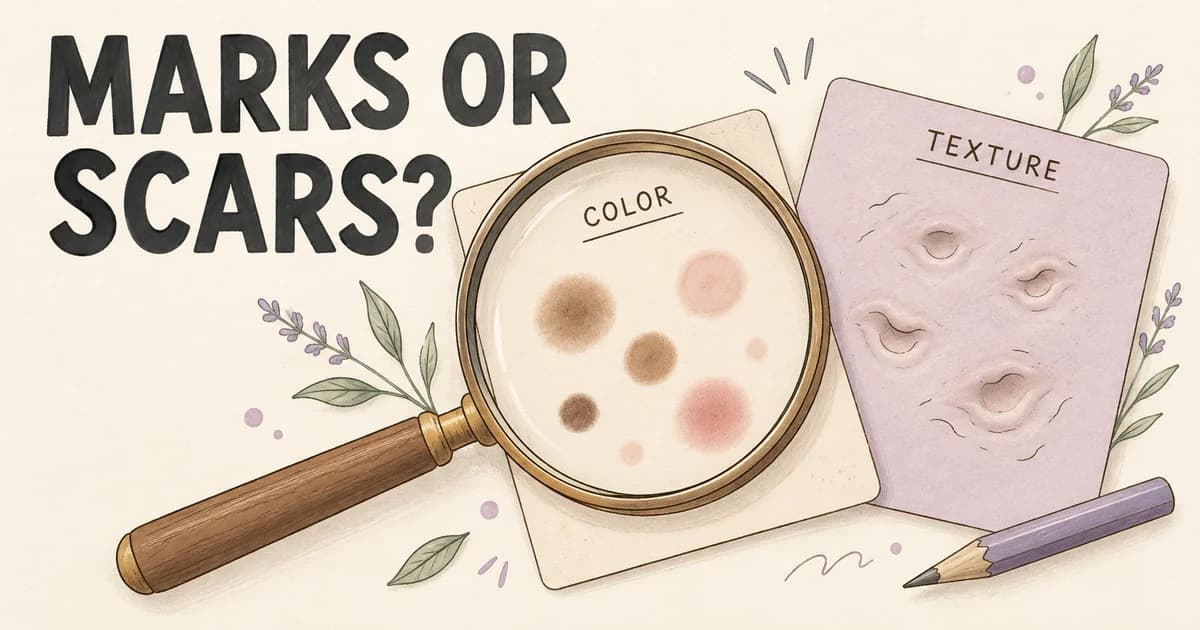
Understanding acne marks vs acne scars starts with two observations: has the color changed, and has the surface changed? That distinction helps you set realistic goals before buying another serum or booking a procedure.
Acne marks vs. acne scars at a glance
An acne mark is usually an area of leftover color after inflammation. The skin may look different while its surface remains level. An acne scar reflects a change in the tissue that supports the skin, so its contour or firmness has changed.
The table below is a guide to describing what you notice, rather than a way to diagnose every spot. A brown area can also contain an indentation, and a raised area may be an active pimple instead of a scar. It is common for several features to be present on the same face.
| What you notice | Possible explanation | What that changes |
|---|---|---|
| Flat brown or gray color | Post-inflammatory hyperpigmentation | Consider acne control, sun protection, and suitable pigment treatment. |
| Flat pink, red, or purple color | Post-inflammatory erythema or another cause of redness | A dark-spot product may not address the main concern. |
| A persistent dip, pit, or uneven contour | A depressed acne scar | Scar shape and depth matter when discussing professional options. |
| A persistent firm raised area | A raised scar or another skin lesion | An examination helps distinguish it from active acne and guide care. |
What do acne marks look like?
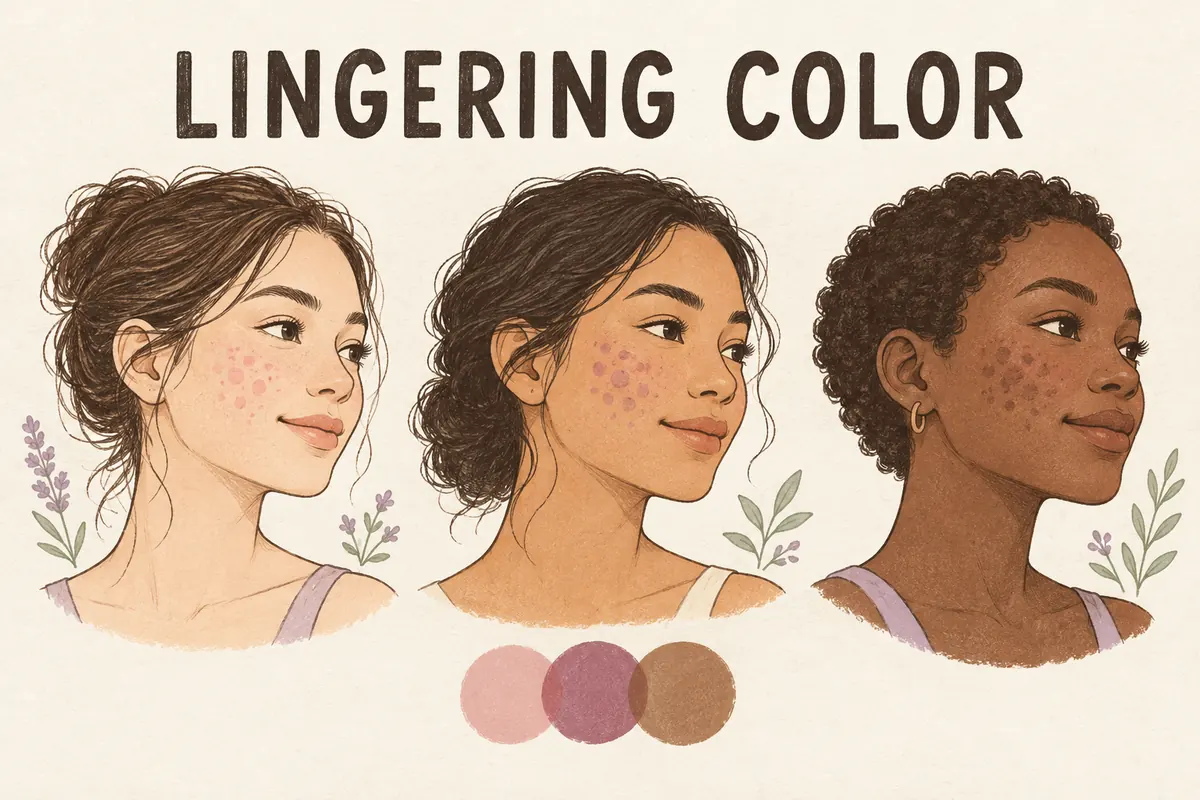
Post-acne marks are color changes that remain where inflammation occurred. Their appearance depends on your skin tone, the type of change, and how long it has been there. A color name alone does not establish the cause.
Brown or gray marks: post-inflammatory hyperpigmentation
Post-inflammatory hyperpigmentation, often shortened to PIH, happens when inflammation leaves extra melanin in the skin. It can look tan, brown, dark brown, or grayish. PIH can affect any skin tone, but it often looks more pronounced and lasts longer in darker skin.
The spot may remain after the original pimple is no longer swollen. Sun exposure can darken it. Not every brown spot is caused by acne, though, so an area that appears without a preceding breakout or keeps changing deserves a closer look.
Pink, red, or purple marks: post-inflammatory erythema
Lingering redness after acne is often called post-inflammatory erythema, or PIE. It relates to vascular changes associated with inflammation and healing, rather than simply extra brown pigment. It is often more apparent in lighter skin, but color can vary and overlap with pigmentation.
A product aimed at brown discoloration will not necessarily have the same effect on a red mark. Persistent redness also has other possible causes, including irritation, so adding more brightening products is not always useful.
Lighter areas can occur too
Inflammation can sometimes leave an area lighter than the surrounding skin. This is called post-inflammatory hypopigmentation. It should not automatically be grouped with brown marks or assumed to need a lightening product. Ask for advice if the area persists or the explanation is unclear.
What do acne scars look like?
Acne inflammation can affect collagen and the skin's healing response. When supporting tissue is lost or scar tissue forms differently, the surface may heal with a depression or a raised area. Scars can also carry lingering redness or pigment.
Indented or pitted scars
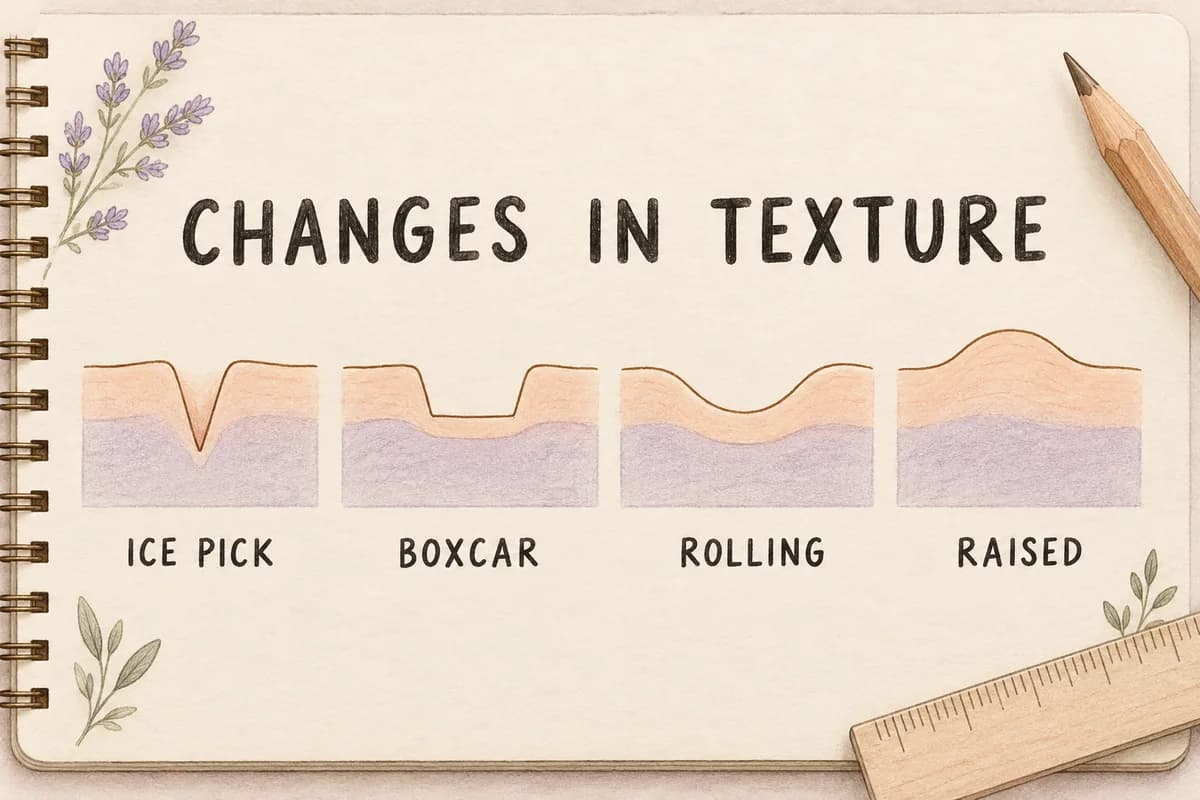
- Ice pick scars have small, narrow openings that extend relatively deeply into the skin.
- Boxcar scars are round or oval depressions with more defined edges.
- Rolling scars form broader depressions with sloping edges, creating an uneven or wavy contour.
These are types of atrophic scars. People often have a mixture, and the depth and shape influence which treatment might help. A pore, temporary swelling, or a shadow is not enough to confidently identify a scar subtype.
Raised scars
Hypertrophic scars are firm raised areas within the original injured area. Keloids grow beyond that area. Raised acne scars can develop on the jawline, chest, shoulders, or back, and may itch or feel tender. They need a different assessment from depressed scars.
How can you tell marks, scars, and active acne apart?
Start with the history: was there a breakout in that place, and has it settled? Notice whether the main concern is lingering color, an indentation, or a persistent raised area. Describe those features without squeezing, scraping, or repeatedly rubbing the skin.
A new tender bump, a whitehead, or a lesion that changes over days may still be active acne. A stable raised area after healing could be scar tissue, but other conditions can resemble both. Pain and timing are useful details to share, not a reliable home diagnostic rule.
Lighting changes the shadows around texture. Side lighting can make a shallow dip seem more obvious, while soft front lighting may hide it. Phone processing, filters, makeup, and camera distance can also change the impression. A single selfie cannot reliably determine scar depth or the right treatment.
You can have a flat red mark beside a brown indentation and an active pimple. That does not mean you need three products immediately. If you cannot confidently describe what remains, a dermatologist can help separate the concerns and set priorities.
Do acne marks and scars go away?
Many flat marks become less noticeable over time, particularly once the inflammation creating new marks is controlled. Fading is gradual and varies with pigment depth, skin tone, sun exposure, ongoing breakouts, and irritation.
For hyperpigmentation a few shades darker than your usual skin color, the American Academy of Dermatology gives a general fading range of six to twelve months after the cause is stopped. Deeper pigment can take longer, sometimes years. This is not a deadline for every acne mark, and red marks do not follow an identical pigment-fading schedule.
With a structural scar, associated color may fade while an indentation or raised contour remains. Established acne scars rarely disappear completely on their own. Treatment can make them less noticeable, but complete removal is not a realistic guarantee.
A mark lasting several months is not proof that it has become a scar. Equally, a scar becoming less red does not mean its structure has returned to normal. Judge the feature you want to improve, rather than treating every leftover spot as the same problem.
A simple routine for skin with post-acne marks
A comfortable routine supports acne treatment and helps you avoid adding irritation. It does not need to include a toner, daily peel, mask, and several serums. If you already have prescribed treatment, keep its instructions central to the plan.
Cleanse gently
Use a gentle, non-abrasive cleanser with lukewarm water and your fingertips. Avoid rubbing a mark with a brush or scrub in an attempt to remove it. Washing more aggressively cannot lift an indentation or scrub away pigment deposited in the skin.
Use a moisturizer you tolerate
Moisturizer can help when acne treatments leave your skin dry or uncomfortable. Look for a suitable non-comedogenic formula, while remembering that a label cannot guarantee every person's response. If even basic products sting, the gentle product-selection approach in our skincare routine for sensitive skin can help you review the basics.
Make sun protection a daytime habit
Choose broad-spectrum, water-resistant sunscreen with SPF 30 or higher and apply it as directed before going outside. Reapply every two hours outdoors and after swimming or sweating, following the label. Shade, a hat, and protective clothing add useful protection.
For dark marks, a tinted sunscreen containing iron oxides can add protection against visible light from the sun. Choose a shade and texture you can use comfortably. Sunscreen helps limit additional darkening; it does not fill a pitted scar.
If product order makes the routine harder to follow, our morning skincare routine explains how to place moisturizer and sunscreen around the rest of your care.

Which ingredients may help acne marks?
The ingredient should match the concern. Treatments that help pigmentation are not interchangeable with treatments for persistent vascular redness or a deep scar. Start by identifying the goal, then consider what your skin already tolerates.
Azelaic acid
Azelaic acid can help treat acne and reduce post-inflammatory pigmentation. That can be useful when breakouts and brown marks coexist. It can still cause irritation, so follow the product instructions or your clinician's advice instead of assuming a higher concentration is automatically better.
Retinoids and other pigment-targeting products
A suitable retinoid may help acne and mild pigment irregularities. Some other ingredients, including vitamin C, may also help uneven tone. None is a universal scar eraser, and you do not need to combine every option in one routine.
Introduce changes gradually and avoid stacking several irritating treatments. Retinoids should not be used during pregnancy. If you are pregnant, trying to become pregnant, or breastfeeding, review treatment choices with your clinician rather than copying someone else's routine.
If a product causes persistent burning, peeling, or worsening redness, reconsider it and ask for advice. Irritation can create more discoloration. Stronger pigment treatments and persistent red marks are good reasons to discuss a targeted plan with a dermatologist.
What can a dermatologist do for acne scars?
Treatment depends on scar shape and depth, your skin tone and healing history, current acne, previous treatments, and your priorities. Controlling ongoing acne usually comes first so new inflammation is not creating more scars while you treat existing ones.
For selected depressed scars, options may include professional microneedling, laser resurfacing, chemical peels, fillers, or techniques that release or revise a scar. Raised scars may need treatments such as injections rather than the same resurfacing approach. Several methods may be combined.
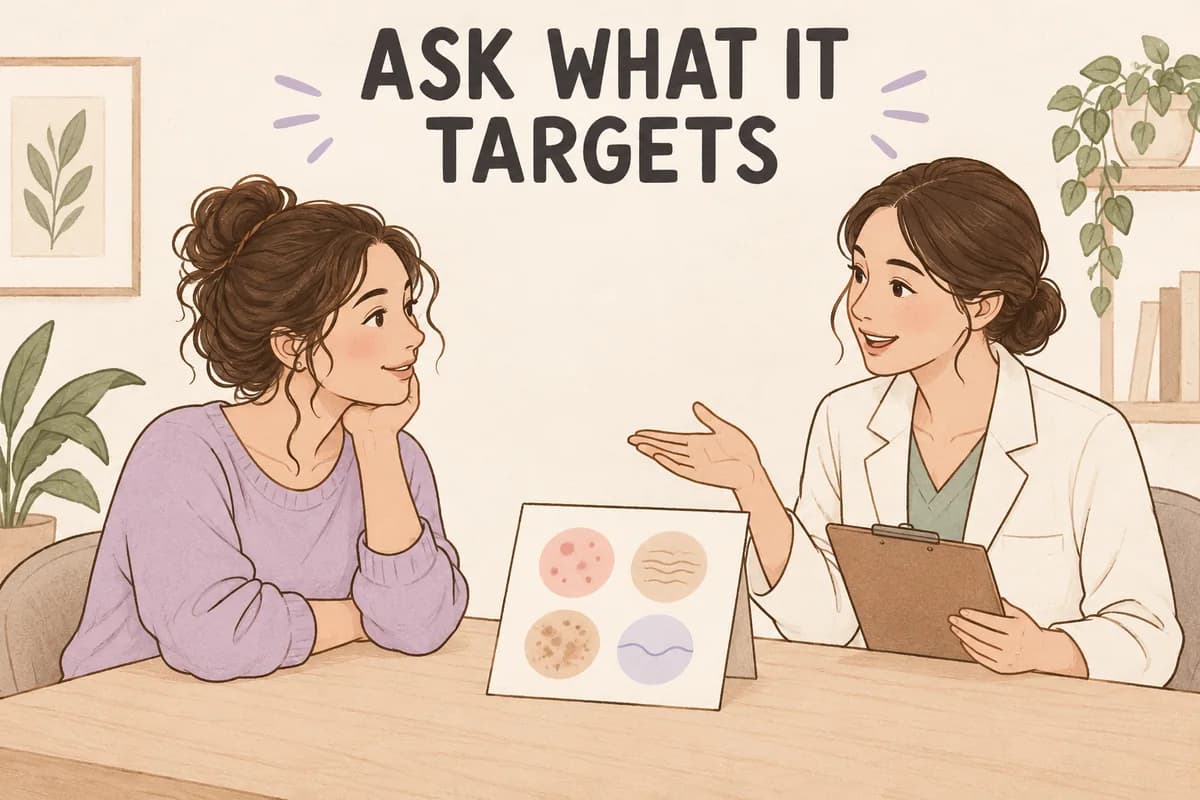
A treatment that improves one feature may leave another unchanged. For example, fading brown color does not necessarily improve the dip underneath it. Ask the clinician which feature each proposed treatment addresses, what improvement is realistic, and how progress will be assessed.
- What type of marks and scars do I have, and is any acne still active?
- What are the risks of darker or lighter patches for my skin tone and history?
- How much downtime, aftercare, and repeat treatment might be involved?
- How do my current medicines, previous procedures, and tendency to form raised scars affect the plan?
Do not assume an at-home roller or a strong peel reproduces a clinical procedure. Microneedling can cause infection, pigment changes, and additional scarring, and it is not suitable for everyone. Have the area assessed before attempting to treat its structure yourself.
Mistakes that can make the problem harder to manage
Picking and squeezing can add inflammation and raise the risk of marks and scarring. If breakouts are deep, painful, or repeatedly leaving new dents, getting effective acne care matters more than continually adding products for the aftermath.
Frequent scrubs, acid combinations, and changing treatments every few days can also make skin harder to assess. Burning and flaking are reasons to reassess, rather than evidence that a mark is being removed. Our guide to over-exfoliated skin explains the signs of doing too much and how to review the routine.
Treat claims that one cream removes every scar or that all marks clear in a set number of weeks cautiously. The same applies to advice based on a filtered before-and-after photo. A useful plan should explain what is being treated and the limits of the expected result.
How to track changes without checking constantly
Choose a manageable interval for check-ins instead of inspecting your skin in every mirror. Use similar lighting, distance, angle, and time of day, with filters switched off. Keep the original photos so changes in camera processing or editing do not become part of the comparison.
Skinreo keeps your skincare routine and skin photo journal together, so you can look back at the products you used alongside changes in your skin's appearance. Note when you started or stopped a product, whether new breakouts are still forming, and any soreness or irritation.
Track color and texture as separate observations. Fewer new breakouts, less irritation, and more consistent sun protection can be useful progress even when an older mark is still visible. A photo journal can support that record; it cannot diagnose a scar or choose a procedure for you.
If close-up comparisons leave you feeling worse, reduce how often you take them. You can seek help for the effect acne or scarring has on your confidence, even if you decide against a cosmetic procedure. Choosing whether to pursue treatment is personal.

When to get professional advice
Book an assessment if deep or painful acne continues, new scars are forming, raised areas itch or hurt, or discoloration persists and you want a clearer treatment plan. You do not need to wait for every spot to settle before asking for help with active acne.
Have an area checked if it grows, bleeds, changes unexpectedly, or does not fit the history of a healed breakout. Bring your product and medication list, a timeline, and a few representative photos. The goal is a plan that fits what is actually present and what you want to improve.
Frequently asked questions
How do I know if I have acne scars or acne marks?
Flat leftover color is more consistent with an acne mark, while a persistent indentation, raised area, or change in contour suggests scarring. They can overlap, and active acne can resemble a raised scar. A dermatologist can assess uncertain areas.
Do acne marks go away?
Many fade gradually once the cause of inflammation is controlled. Brown pigmentation may take months or longer, and red marks have variable timelines too. Continued acne, irritation, and sun exposure can complicate progress. Persistence alone does not prove that a mark is a scar.
What is the difference between acne marks and acne scars?
Acne marks usually refer to leftover color after inflammation. Acne scars involve altered skin structure, often appearing sunken or raised. Fading color and improving a scar's contour are different treatment goals, even when both changes occupy the same spot.
Can toner remove acne marks?
A toner is not an essential treatment for marks. Its ingredients and your skin's tolerance matter more than the product category. A pigment-targeting ingredient may help some brown marks, but an irritating toner can make matters worse and will not erase an established textural scar.
Are red acne marks scars?
A flat red mark after acne may be post-inflammatory erythema, which is a color change rather than a structural scar. A scar can also look red, so color alone is not enough to decide. Persistent redness or a changing raised area is worth assessing.
What is the hardest acne scar to get rid of?
There is no single answer for everyone. Deep narrow ice pick scars can be challenging, but depth, tethering, raised tissue, skin response, and previous treatment all affect the plan. Matching treatment to the scar matters more than ranking scar types, and complete removal cannot be promised.
How can I tell if it is acne or scarring?
New tenderness, swelling, or a lesion changing over days can suggest ongoing acne. A stable contour change after a breakout heals may be scarring. Some raised scars and other skin lesions can resemble pimples, so do not squeeze the area to test it; get advice if you are unsure.
Can you have acne marks and scars at the same time?
Yes. A brown or red mark can sit over an indentation, and flat marks can appear alongside separate scars and active breakouts. A treatment plan may need to address acne, color, and texture in stages rather than expecting one product to do every job.
Start by describing the change you notice: color, texture, ongoing acne, or a combination. A gentle routine and effective acne care provide a useful foundation, while a professional assessment can help you choose the next step without chasing an unrealistic promise.
References
Sources accessed October 26, 2026.
- American Academy of Dermatology: Acne scars overview
- American Academy of Dermatology: Acne scars signs and symptoms
- American Academy of Dermatology: Acne scars consultation and treatment
- DermNet: Acne scarring
- DermNet: Postinflammatory hyperpigmentation
- American Academy of Dermatology: How to fade dark spots in darker skin tones
- American Academy of Dermatology: Face washing 101
- American Academy of Dermatology: Moisturizer and acne
- American Academy of Dermatology: How to apply sunscreen
- DermNet: Azelaic acid
- American Academy of Dermatology: Retinoid or retinol?
- American Academy of Dermatology: Dermatologist-approved pregnancy skin care
- American Academy of Dermatology: Skin care habits that can worsen acne
- American Academy of Dermatology: Microneedling can fade scars, uneven skin tone, and more
- U.S. Food and Drug Administration: Microneedling devices
Illustrations: Skinreo. Image usage and permissions.