
Routines · Sun protection
How Much Sunscreen Should You Use on Your Face?
A practical guide to sunscreen amounts, finger lengths, and the areas that are easy to miss.
TL;DR
- For the face alone, the Skin Cancer Foundation suggests starting with a nickel-sized dollop. The American Academy of Dermatology gives a more generous guide of at least one teaspoon for the face.
- For the face, neck, and ears together, Cancer Council Australia advises about one teaspoon (5 mL). Apply evenly across every exposed area, including the hairline and jaw.
- Choose broad-spectrum SPF 30 or higher, apply before going outdoors, and reapply at least every two hours outdoors. Follow the label for swimming, sweating, and towel drying.
If one sunscreen guide says a quarter teaspoon and another says two fingers, start by asking what each amount is meant to cover. A measure for the face alone can leave you short once you include your ears and neck.
How much sunscreen to use at a glance
For your face alone, the Skin Cancer Foundation uses a nickel-sized dollop as a visual guide. A nickel describes the width of a dollop. A flat puddle and a taller mound can look equally wide and contain different amounts.
The American Academy of Dermatology (AAD) recommends at least one teaspoon for the face in its application guide. Cancer Council Australia gives about one teaspoon for the face, neck, and ears together. These are separate organizations’ guides. Use the directions on your product and apply enough to coat all exposed areas evenly.
| Area or method | Amount or guide | What to account for |
|---|---|---|
| Face alone | Nickel-sized dollop (Skin Cancer Foundation) | A visual estimate. Face size and the height of the dollop affect coverage. |
| Face alone | At least 1 teaspoon (American Academy of Dermatology) | A more generous face guide published by the AAD. |
| Face, neck, and ears | About 1 teaspoon, or 5 mL (Cancer Council Australia) | Spread it across all three areas, including the exposed sides and back of the neck. |
| Two-finger method | A line along each of two fingers | An estimate for lotion or cream. The tube and stripe thickness change the volume. |
Is a quarter teaspoon enough for your face?
A quarter teaspoon is about 1.25 mL. It can serve as a rough face-only estimate for some adults. A small study of 20 adults estimated about 1 to 1.6 mL for the face using a geometric approximation and an assumed product density. The estimate varies with the size of the face and how much the product weighs per milliliter.
Treat a quarter teaspoon as an estimate for the face alone. Cover your ears and exposed neck separately if you are using that measure, and use more whenever you need it for an even coat.
How sunscreen is measured in SPF tests
The FDA’s SPF test uses 2 milligrams of sunscreen per square centimeter of skin. The test measures the mass spread over a set area. A measuring spoon tells you volume. A pump count, finger stripe, or coin-size dollop is a practical way to dispense a product, with some variation between bottles and formulas.
The amount matters because a thinner application reduces protection. In one study, people applied a median of 1.33 milligrams per square centimeter in everyday use. Testing several application amounts also found that measured SPF dropped as people applied less. A higher SPF still needs a generous, even application.
How the two-finger and three-finger rules work
For the two-finger method, squeeze one continuous line along your index finger and another along your middle finger. It gives you a visual cue for a cream or lotion you use regularly. A narrow nozzle dispenses a thinner line, and a runny fluid can be difficult to measure this way.
The three-finger version uses an extra line. That can give you more product for exposed areas beyond the face. The amount in three stripes depends on the tube, stripe thickness, and finger length. Use the guide as a reminder to check coverage across the areas you intend to protect.
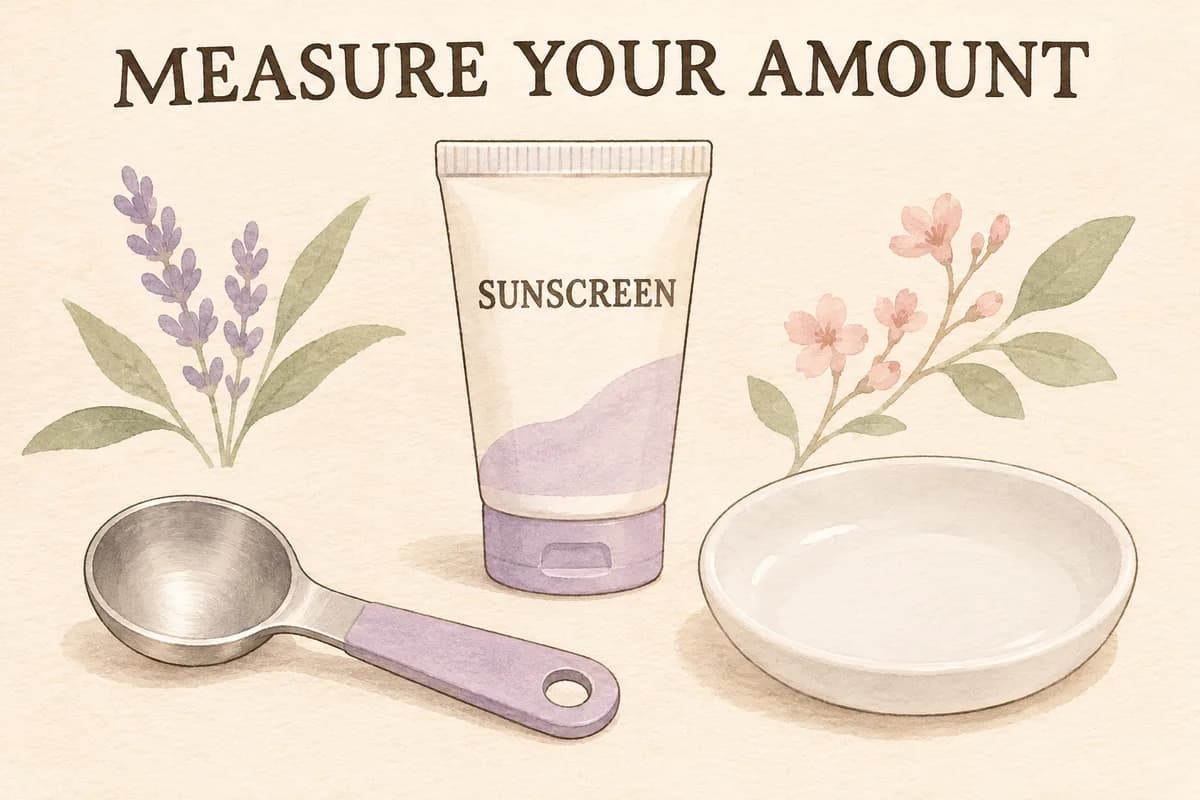
If you prefer a repeatable measurement, use a level measuring spoon for lotion or cream. For a pump, dispense your usual amount into a measuring spoon once to see how much that particular pump delivers. A pump from another bottle may dispense a different amount.
How to apply sunscreen evenly to your face
Start with the main areas
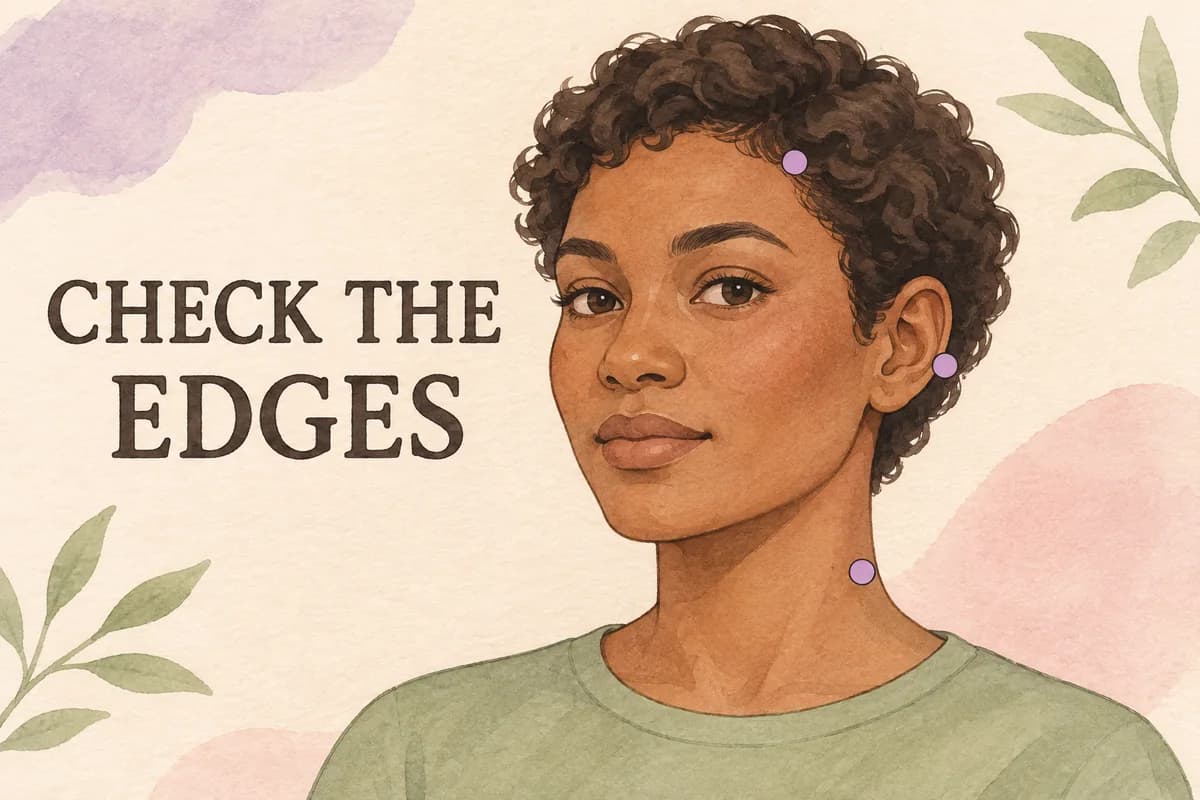
Spread sunscreen across your forehead, nose, cheeks, and chin. Starting with small dots across the face can help you distribute the amount you dispensed before you smooth it into one even layer.
Check the hairline, jaw, ears, and neck
Check the temples, the sides of your nose, and the edge of your jaw. Cover your ears and the exposed front, sides, and back of your neck as needed. If a part or thinning hair leaves your scalp exposed, cover it with a hat or apply sunscreen suitable for that area.
Protect the eye area and lips
UV photography studies found that people often miss skin around the eyes. Use products there according to their label and keep them out of your eyes. UV-protective sunglasses and a wide-brimmed hat also help protect the area. A lip balm with SPF 30 or higher is an option for your lips.
If a sunscreen feels too heavy in one pass, spread the amount you planned to use in two passes and check for gaps. Research on consecutive applications found that a second pass improved coverage in the study. Give each pass enough time to settle if the product tends to roll up.
How much to use with lotion, sticks, and sprays
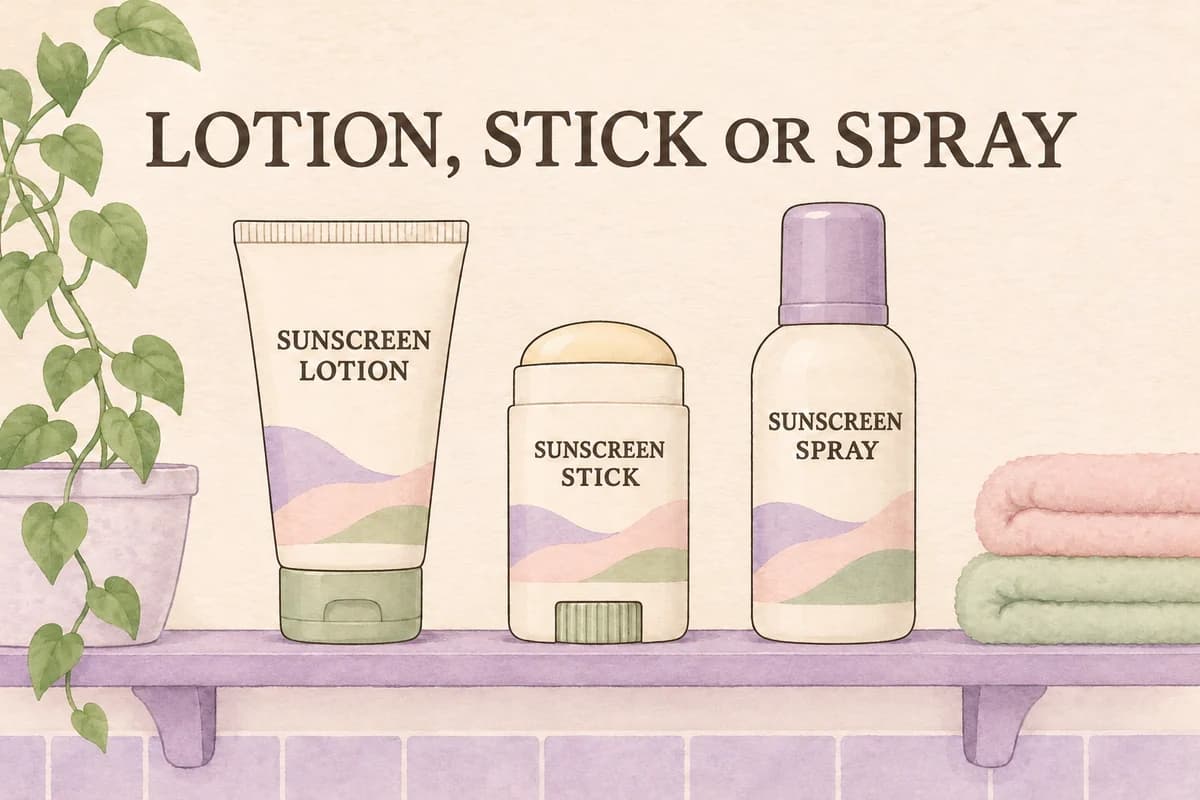
A cream, lotion, or fluid is easy to portion before you start. If you prefer a stick, the AAD suggests four passes back and forth over each area, then spreading the product evenly. Check the label for directions specific to your stick.
For a spray suitable for facial use, apply it to your hands first and then spread it over your face as directed. Keep spray away from your face and mouth when dispensing it and avoid inhaling it. With a mist, it can be harder to judge how much reaches your skin.
If a product stings or is hard to spread in the amount you need, try a different texture that you can wear comfortably. Our skincare routine for sensitive skin covers how to introduce and test a new formula.
When to apply and reapply facial sunscreen
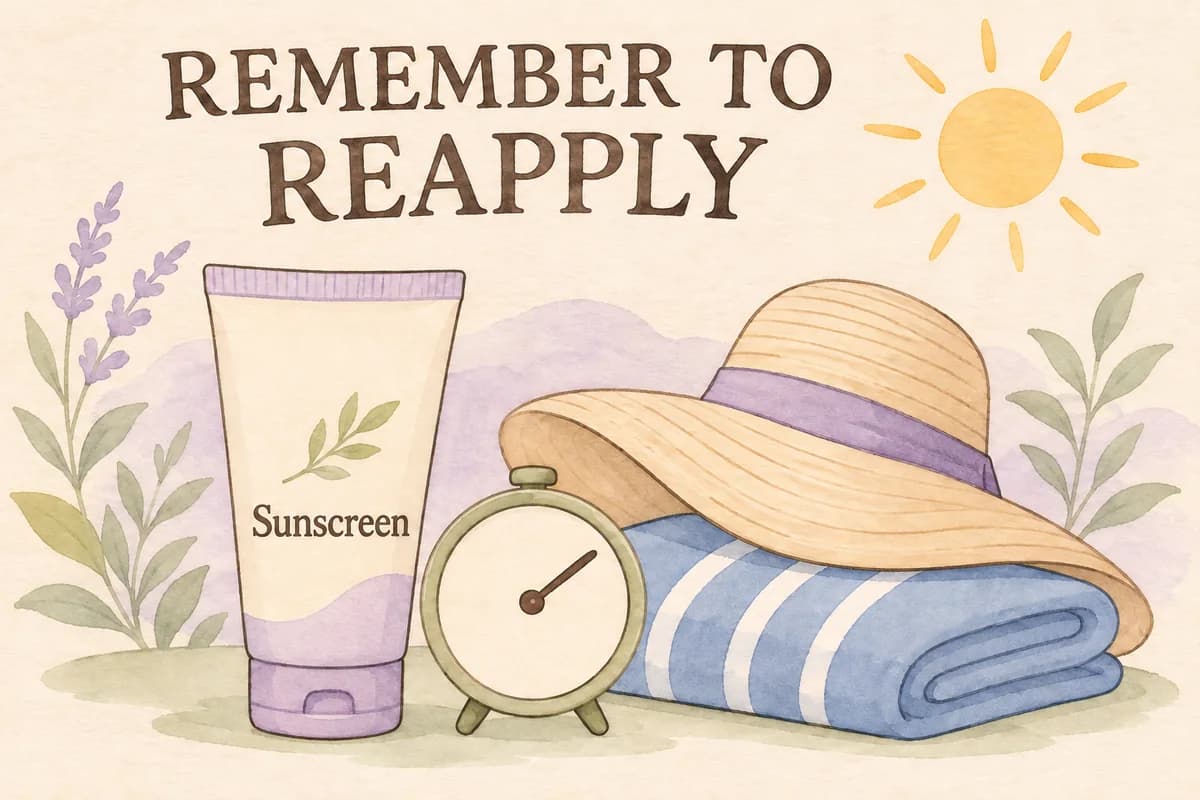
Check the label for when to apply before going outdoors. The AAD advises applying about 15 minutes ahead. Reapply at least every two hours while outdoors and follow the label after swimming, heavy sweating, or towel drying.
U.S. water-resistant labels state a tested duration of 40 or 80 minutes during swimming or sweating. Use that interval when you’re in the water or sweating, and reapply after towel drying. A hat, sunglasses, protective clothing, and shade help when reapplying is difficult.
Keep sunscreen somewhere you can reach it before heading out. If you want to track whether it fits into your day, you can log sunscreen in your Skinreo routine and note when it feels comfortable or pills.
How to wear and reapply sunscreen with makeup
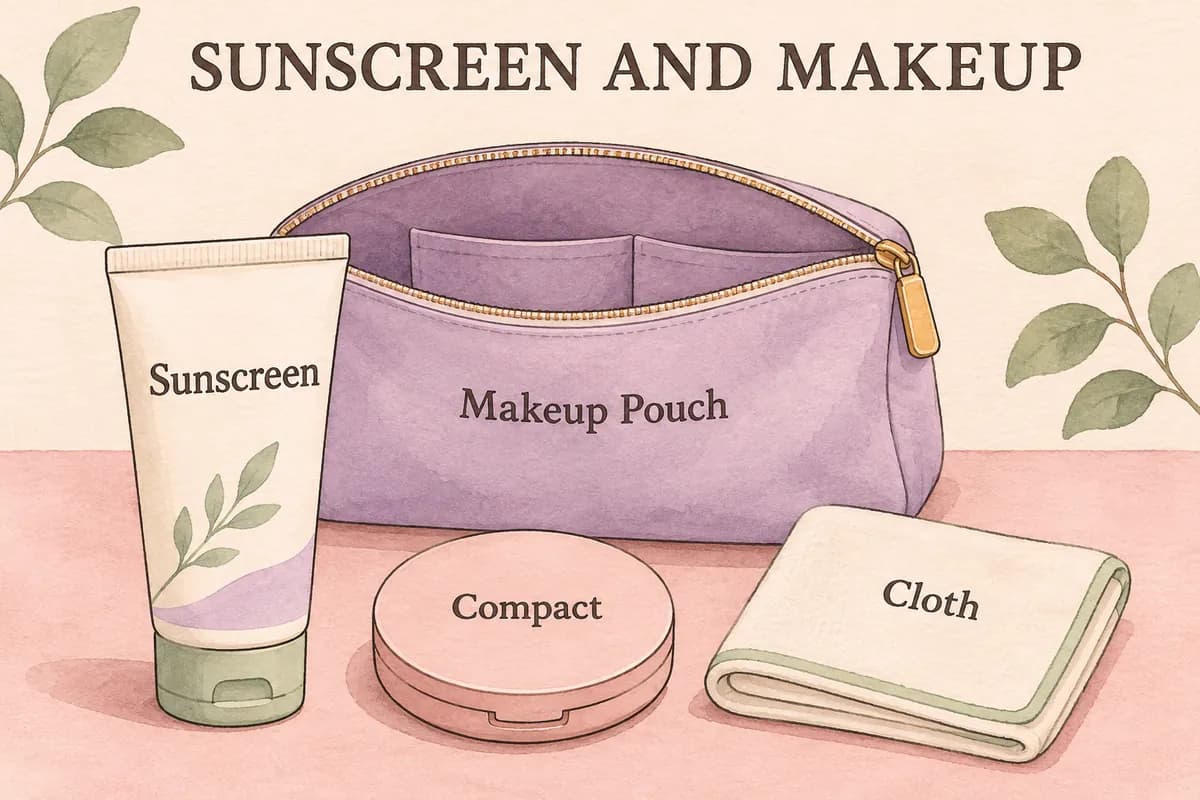
Apply sunscreen after your skincare and before makeup, following the sunscreen’s directions. Let the layer settle before adding foundation. If products pill, try simplifying the optional layers underneath or choosing a lighter moisturizer while keeping the same sunscreen coverage.
See our morning skincare routine for the full order of cleanser, moisturizer, sunscreen, and makeup.
If you wear tinted moisturizer or makeup with SPF, follow the product’s directions for sun protection. Research comparing an SPF moisturizer with sunscreen found that participants missed more skin when using the moisturizer, especially around the eyes. Pay attention to the amount you apply and the areas you cover.
When you need to reapply over makeup, a formula you can spread evenly is a practical choice. Work in small sections and use the directed amount. If makeup gets in the way of even coverage, remove or touch up your makeup where needed. Keep shade and protective accessories in the plan when you’re outdoors.
How long does a 50 mL bottle of face sunscreen last?
Divide 50 mL by how much you use each time to estimate the number of applications. At 1.25 mL per application, the bottle contains about 40 applications. At 5 mL per application, it contains about 10. These examples illustrate how bottle size and amount relate. Use the amount you need for the area you’re covering.
Two applications a day would use the bottle twice as fast. If you also use it on your neck, ears, or other exposed areas, include that product in your estimate. Check the expiration date as well as how much is left in the bottle.
Frequently asked questions
Is 1/4 teaspoon of sunscreen enough for my face?
A quarter teaspoon is about 1.25 mL and may cover some adult faces. The amount depends on face size, product density, and how evenly you spread it. The American Academy of Dermatology offers a more generous teaspoon guide. Use the product directions and account for exposed ears and neck separately if you measure for your face alone.
What is the three-finger rule for sunscreen?
It means dispensing three lines of sunscreen along three fingers. It gives you an extra line compared with the two-finger method. The volume varies with the product and stripe thickness, so check your coverage and follow the label.
Is SPF 50 too much for everyday use?
Broad-spectrum SPF 50 is a suitable everyday option if you like the formula and can apply it generously. The AAD recommends broad-spectrum SPF 30 or higher. Use the same care with coverage and reapply as directed.
How long does 50 mL of face sunscreen last?
At 1.25 mL per application, 50 mL gives about 40 applications. At 5 mL per application, it gives about 10. Reapplication and covering a larger area use the bottle faster.
How much sunscreen should I use on my face and neck?
Cancer Council Australia gives a guide of about one teaspoon (5 mL) for the face, neck, and ears together. Apply it evenly to those exposed areas and follow your product’s directions.
Do I use less sunscreen if it is SPF 50?
Use a generous, even layer of SPF 50. Applying a smaller amount reduces protection, and the SPF number on the label reflects the amount applied in testing.
How often should I reapply sunscreen on my face?
Reapply at least every two hours while outdoors. Use the label’s directions for swimming, sweating, and towel drying. Apply again before going outside if you’ve wiped off the earlier layer.
Can I mix sunscreen with moisturizer or foundation?
Apply them as separate layers. Put sunscreen on after moisturizer and before makeup so you can apply the intended amount and spread it evenly. If you want one product, choose an SPF moisturizer you can use according to its sun-protection directions.
For a routine you can repeat, choose a sunscreen you can spread evenly and keep it available for reapplication. Check the edges of your face and any exposed skin beyond them before heading out.
References
Sources accessed November 4, 2026.
- Skin Cancer Foundation. How much sunscreen should I be using on my face and body?
- American Academy of Dermatology. How to apply sunscreen.
- Cancer Council Australia. Advice on how to choose, apply and store sunscreen.
- FDA. Labeling and effectiveness testing for over-the-counter sunscreens.
- Srinivas et al. Estimating the amount of sunscreen for the face.
- Fujiwara et al. The effect of application density on sunscreen protection.
- Heerfordt et al. Sunscreen use optimized by two consecutive applications.
- Pratt et al. Facial areas missed during sunscreen application.
- American Academy of Dermatology. How to use stick and spray sunscreens.
- FDA. Sunscreen and sun protection.
- Lourenco et al. Facial and eyelid coverage of SPF moisturizer and sunscreen.
- American Academy of Dermatology. Sunscreen FAQs.
Illustrations: Skinreo. Image usage and permissions.